REVIEW · GOA
Private Guided Heritage Walking Tour in Goa
Book on Viator →Operated by Get Me Vacation · Bookable on Viator
Go past the beach and into Old Goa. This private guided heritage walk is a fast, smart way to understand how Portuguese rule shaped architecture and faith—without needing a full-day tour. You’ll also get to cover UNESCO-listed churches and major landmarks in just 3 to 4 hours.
I love that the route mixes big headline sites with the quieter context bits, like a stop at the Archaeological Museum of Goa. I also like that the guide is built for questions—one guide named Abhinav is repeatedly praised for being friendly and for explaining what you’re actually looking at, with printouts, videos, and personal stories. One thing to consider: it’s a walking tour, so plan for sun, stairs in older churches, and limited shade.
In This Review
- Key Highlights You’ll Care About
- Old Goa, 10:30am to 1:30-ish: A Walking Tour That Actually Works
- Getting Oriented at Viceroy’s Arch (The Trip’s First Big Clue)
- Basilica of Bom Jesus: Red Walls, Baroque Shape, Portuguese Flavor
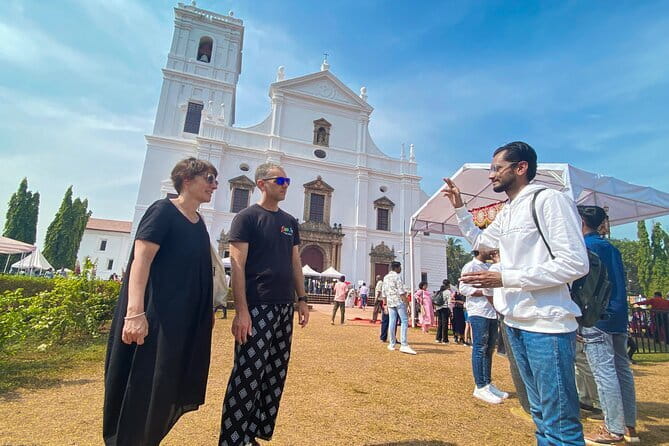
- Sé Cathedral: A Church Scale Lesson from Portugal to Asia
- Gateway of Yusuf Adil Shah’s Palace: A Black-Rock Reminder of Earlier Goa
- Archaeological Museum of Goa: The “What You Can’t See Outside” Stop
- St. Cajetan’s Church: River Views, Jesus Statue, and Sightline Magic
- Church of St. Francis of Assisi: UNESCO Details You Can Actually Notice
- Price and Value: Why This One Costs So Little (Mostly Because Tickets Are Covered)
- How to Prepare for a 3–4 Hour Old Goa Walk
- Who This Tour Is Best For (And Who Might Skip It)
- Should You Book This Private Guided Heritage Walk?
- FAQ
- How long is the Private Guided Heritage Walking Tour in Goa?
- What time does the tour start?
- Where do I meet the guide?
- Does the tour end at the same place?
- What’s included in the price?
- Which admission tickets are included?
- Is hotel pickup included?
- What languages does the guide speak?
- What happens if weather is bad?
Key Highlights You’ll Care About
- Portuguese rule, in stone and churches: You’ll connect the history directly to what’s still standing in Goa Velha.
- UNESCO stops without the hassle: Multiple major churches are included, with time to look closely rather than just pose.
- Tickets are mostly covered: Several admissions are included, so you won’t add surprise costs mid-walk.
- A guide who brings extras: Abhinav-style touches like printouts, videos, and anecdotes help fill in gaps you can’t see from the street.
- Small max group size: Up to 25 people means you can still ask questions and move at a human pace.
- Strong mix of eras: You’ll see Portuguese influence alongside an older remnant from a 16th-century sultan’s palace.
Old Goa, 10:30am to 1:30-ish: A Walking Tour That Actually Works

This is not a “here’s a photo, bye” kind of tour. It’s a 3 to 4 hour guided walk starting at Viceroy’s Arch in Old Goa (Goa Velha) at 10:30am, ending back at the same meeting point. That start time matters. Old Goa gets busy later in the day, and morning light makes stone details easier to spot on churches and gateways.
The tone is practical. Your guide isn’t just naming monuments—they’re guiding you through how Goa looked and functioned under Portuguese influence, then pointing out what’s still visible today. With a maximum of 25 people, it’s group enough to keep the price low, while still small enough for conversation.
You should know one more detail before you go: it uses a mobile ticket, and you won’t have hotel pickup or drop-off. Plan to reach the meeting point on your own.
You can also read our reviews of more walking tours in Goa


Getting Oriented at Viceroy’s Arch (The Trip’s First Big Clue)
Stop 1 is Viceroy’s Arch, an ASI protected Monument of National Importance. You’ll spend about 20 minutes, and admission is included.
This is a smart opener. Gateways like Viceroy’s Arch are where you can start seeing the “official” Goa—the kind of power and control that Portuguese authorities represented. Even if you’re not a history buff, you’ll get a quick visual foundation: arches, materials, and layout tell you where authority sat and how people moved through the area.
What to watch for: look closely at the arch structure itself—stone texture and proportions are the kind of details that become clearer once your guide explains what the monument was doing in its original setting.
Potential drawback: because it’s the first stop, you might arrive still “zoomed out.” Give it a few minutes before judging—by the time the tour reaches the churches, your brain clicks into place.
Basilica of Bom Jesus: Red Walls, Baroque Shape, Portuguese Flavor
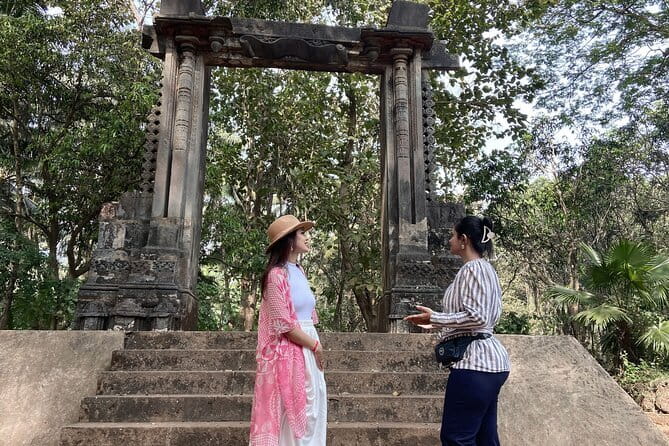
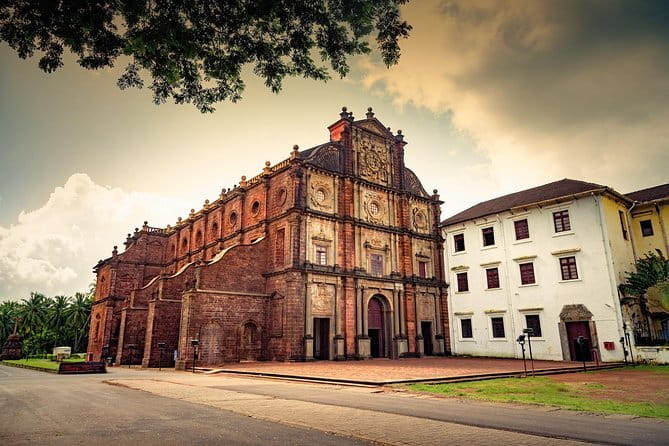
Next is the Basilica of Bom Jesus, about 30 minutes, with admission included. The building is described as an ancient-looking red structure, topped by a grand Baroque presence with a mix of architectural styles—Corinthian, Doric, and other influences.
This is one of those stops where time matters. Spend the full window. The facade and massing are where you’ll see the design logic: you’re not just looking at decorations, you’re looking at how European religious architecture got adapted and reinforced in Goa.
Why this stop is valuable for you: if you only know Goa as beaches and seafood, this is the moment your understanding shifts. Portuguese colonial influence becomes real when you can see it as design choices—how entrances are shaped, how walls “frame” worship spaces, and how styles get layered.
How to make it pay off: ask your guide what contrasts you’re seeing—baroque drama next to older-looking elements. That kind of comparison is where the tour becomes more than sightseeing.
Sé Cathedral: A Church Scale Lesson from Portugal to Asia

Stop 3 is the Sé Cathedral, also about 30 minutes, with admission included. You’ll hear that it’s said to be bigger than any church in Portugal and believed to be Asia’s largest church.
Even if you take those claims with a grain of perspective (sizes and rankings can be argued), the takeaway is clear: this is a major statement church. It communicates Portuguese religious presence through scale.
What I like about this kind of stop: when a guide explains the reason behind the size—who it served, what it signaled, and how it fit the Portuguese-era landscape—you start reading the cathedral the way you’d read a city map. The cathedral stops being a building and turns into a landmark in a system.
Possible consideration: Sé Cathedral can feel like a lot to absorb in a short time. If you tend to get museum-fatigue, focus on fewer things: the facade, the main entrance zone, and any architectural cues your guide points out.
Gateway of Yusuf Adil Shah’s Palace: A Black-Rock Reminder of Earlier Goa
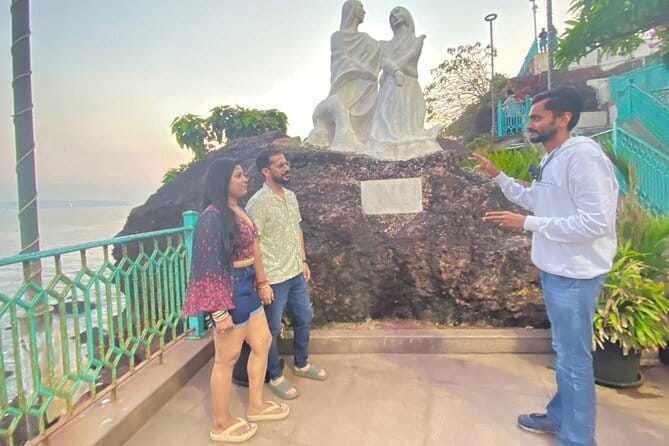
Stop 4 is the Gateway of the Palace of Yusuf Adil Shah, about 20 minutes, with admission included. The standout detail here is the black volcanic rock. It’s described as the sole remnant of a grand 16th-century sultan’s palace.
This stop is a useful counterweight. Portuguese Goa wasn’t the first story on these grounds. When you see a remnant from Yusuf Adil Shah’s palace, you get a sense of continuity and change—power moved, styles shifted, and yet the physical landscape remembers.
Why you’ll appreciate this: it prevents the tour from turning into a one-note Portuguese playlist. You’ll understand Goa as layers, not a single era.
You can also read our reviews of more guided tours in Goa






Archaeological Museum of Goa: The “What You Can’t See Outside” Stop
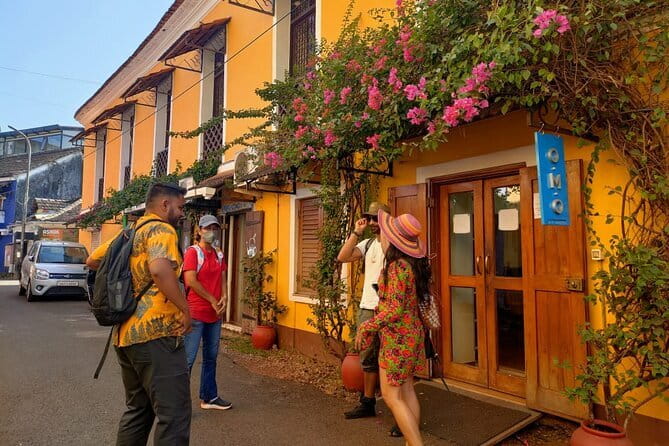
Stop 5 is the Archaeological Museum of Goa, about 30 minutes, with admission included. This is a compact history museum with ancient artifacts excavated in Goa and portraits from colonial times.
This is the part of the walk that often becomes the favorite, because it’s where abstract ideas get pinned down. Churches and gateways show you what survived. The museum helps you interpret what didn’t.
What you should expect: fewer grand vistas, more objects and faces—ancient artifacts and colonial portraits. Your guide can connect these items to what you just saw outside, which is why the museum works well inside this tight 3 to 4 hour schedule.
If you hate indoor stops: don’t worry—it’s only about half an hour, and it breaks up the church circuit.
St. Cajetan’s Church: River Views, Jesus Statue, and Sightline Magic
Stop 6 is St. Cajetan’s Church, about 45 minutes, and notably it’s listed as admission free. This is also where you get a shift from “architectural close-up” to “how the area feels.”
You’ll discover details including the Statue of Jesus and—based on the tour description—excellent views related to the Mandovi River and Divar Island. The itinerary also points out that the views connect to the Adil Shah Palace Gateway and Viceroy’s Arch, so this can work like a living map.
Why the extra time here helps: 45 minutes gives you space to sit with the view and let the history land. Standing in one spot and seeing landmarks in relation to the river is a different kind of learning than reading signs.
A small practical note: if weather is bright, these view moments are excellent for photos. If it’s hot, this is also the stop where you’ll want to slow down and pace yourself.
Church of St. Francis of Assisi: UNESCO Details You Can Actually Notice
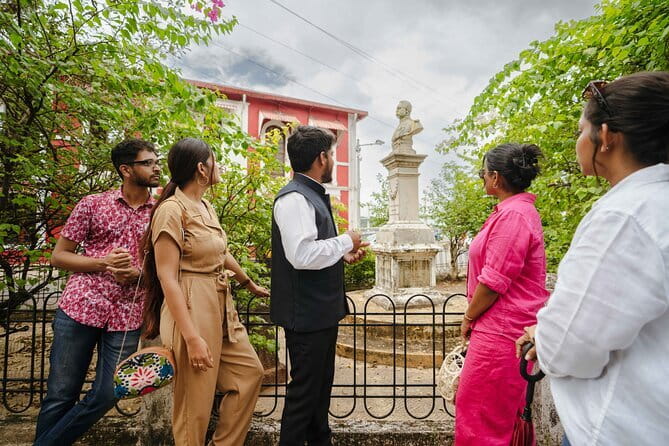
Stop 7 is the Church of St. Francis of Assisi, a UNESCO World Heritage Site, about 30 minutes, with admission included. The tour description highlights brilliantly preserved buildings and—inside—the presence of fine decorative frescoes and paintings on wood showing the life of St. Francis of Assisi.
This is the emotional payoff stop for many people. Frescoes and wooden paintings reward quiet looking. In a short visit, you won’t see everything, so aim for the guide-led highlights—where they tell you what to notice in the art and why the decoration matters.
What makes this stop special for you: UNESCO sites can feel like checkboxes. Here, the tour structure encourages observation. You’re not rushed through; you’re helped to interpret.
Possible drawback: if you’re not interested in religious art techniques, you might focus on the overall preservation instead. That still works—just know what you’ll likely enjoy most.
Price and Value: Why This One Costs So Little (Mostly Because Tickets Are Covered)
At $11.33 per person, this tour feels like a budget win—especially because many admissions are included. The tour includes all fees and taxes, and admission tickets are explicitly included for stops like Viceroy’s Arch, Basilica of Bom Jesus, Sé Cathedral, Gateway of Yusuf Adil Shah, Archaeological Museum of Goa, and Church of St. Francis of Assisi. St. Cajetan’s Church is listed as free.
That matters because entry fees add up quickly when you visit multiple UNESCO or protected sites. Here, you get several paid stops bundled into one guided route.
Also, the tour includes a highly trained storyteller/guide who can speak English, Spanish, and Hindi, plus photo opportunities. You’re paying for context and time, not just access.
What’s not included: hotel pickup and drop-off, plus tips. You’ll handle getting to the meeting point and you’ll decide your tip based on the guide and your experience.
How to Prepare for a 3–4 Hour Old Goa Walk
A few practical choices can make this feel smooth instead of tiring:
- Wear comfortable shoes. Older areas and church entrances can involve uneven ground and steps.
- Bring sun protection. It’s a morning start, so you’ll dodge some heat, but you’ll still be outdoors during parts of the route.
- Charge your phone. You’ll use the mobile ticket and likely take lots of photos.
- Go with questions. The tour is set up for explanation, and guides like Abhinav are praised for answering lots of questions and using materials like printouts and videos to clarify what you can’t read on stone.
Who This Tour Is Best For (And Who Might Skip It)
This tour fits you if:
- You’re in Goa for the first time and want Portuguese colonial architecture in a tight, organized format.
- You like churches, gateways, and museum stops—with guidance that helps you interpret what you see.
- You enjoy a slower pace where your guide helps you notice details, not just where to stand.
You might consider skipping if:
- You only want beach time and prefer not to spend a morning walking through churches.
- You dislike guided structure and want to wander entirely on your own.
Should You Book This Private Guided Heritage Walk?
If your goal is to get oriented to Goa Velha quickly, I’d book it. The biggest reasons are practical: the route covers multiple major sites in 3 to 4 hours, many admissions are included, and the guide experience leans toward explanation rather than reciting facts.
If you’re picky about walking, treat it as a “church-and-history morning” and plan accordingly. Get to the meeting point at 10:30am, bring comfortable shoes, and go in ready to look closely. You’ll leave with a much clearer sense of how Portuguese influence shaped Goa’s architecture—and where older layers still show up in stone.
FAQ
How long is the Private Guided Heritage Walking Tour in Goa?
The tour lasts about 3 to 4 hours.
What time does the tour start?
It starts at 10:30am.
Where do I meet the guide?
You meet at Viceroys Arch in Old Goa (Goa 403402, India).
Does the tour end at the same place?
Yes. The activity ends back at the meeting point.
What’s included in the price?
All fees and taxes are included, along with a storyteller/guide, photo opportunities, and admission tickets for many of the listed stops.
Which admission tickets are included?
Admission tickets are included for Viceroy’s Arch, Basilica of Bom Jesus, Sé Cathedral, Gateway of the Palace of Yusuf Adil Shah, Archaeological Museum of Goa, and the Church of St. Francis of Assissi. St. Cajetan’s Church is listed as free.
Is hotel pickup included?
No. Hotel pickup and drop-off are not included.
What languages does the guide speak?
The guide can speak English, Spanish, and Hindi.
What happens if weather is bad?
The tour requires good weather. If it’s canceled due to poor weather, you’ll be offered a different date or a full refund.