REVIEW · GOA
Panaji City Tour with museum visit
Book on Viator →Operated by Exclamations Goa · Bookable on Viator
Panaji can feel like Goa in miniature. This walking tour threads Panaji’s backstreets into a quick story of geography, architecture, and local life, with an easy museum stop and snack breaks to keep it fun (not just lecture mode).
I especially love how the route uses real places—Goa State Museum and Fontainhas—to explain how Panaji grew and changed over time. It’s also built for a short window: about 2 to 3 hours, starting at 8:00 am, so you can still have the rest of your day for the beach or just wandering.
One thing to consider: it’s weather-dependent, and since it’s a walking format, you’ll want comfortable shoes and a little patience with Goa’s morning heat. Also, it focuses more on sights and tastes than on shopping.
In This Review
- Key highlights at a glance
- How Panaji’s streets teach you Goa in a few hours
- Goa State Museum’s palace origins and the flag-raising moment
- Fontainhas lanes: shell windows, painted tiles, and Portuguese-leaning architecture
- Mahalaxmi Temple: a short visit that resets the mood
- Snack breaks in local cafes and bakeries (and how to use them)
- Price, pacing, and value of a $12 guided loop
- Should you book this Panaji city tour with museum visit?
- FAQ
- Where does the tour start?
- What time does the tour begin?
- How long is the Panaji City Tour with museum visit?
- Is this tour walking-only?
- What are the included stops?
- Is the museum admission included?
- Are snacks included?
- Does the tour include shopping?
- Is the tour private?
- What is the cancellation policy if weather is bad?
Key highlights at a glance
- Goa State Museum’s dramatic past (Adilshah summer palace, Portuguese use, and the flag-raising moment)
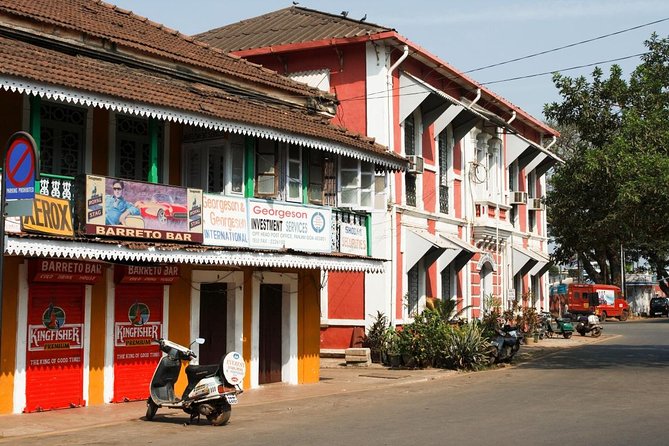
- Fontainhas stroll with Latin architecture details like shell windows and painted Azulejos tiles
- A short, meaningful temple visit that breaks up the walking loop
- Snack time included, with stops at local cafes and bakeries
- Guides add the storytelling layer, with examples like Vimala and Sawani praised for making history easy to follow
How Panaji’s streets teach you Goa in a few hours
Panaji isn’t huge, but it’s packed with clues about the layers of Goa. On this tour, I like that you don’t just pass by buildings—you get the “why” behind what you’re looking at. The guide connects city geography, architecture styles, and street-level details, so the places start to make sense fast.
You’ll walk through Panaji’s bylanes with a focus on history and culture. The pacing is designed for a compact morning loop: you’re out for roughly 2 to 3 hours, then you’re back at the same meeting point. That makes it practical if you’re spending limited time in Goa or you want a structured start before doing self-guided wandering later.
This is also set up to be low-stress logistically. It runs as a group experience with group discounts, and you use a mobile ticket. It’s private in the sense that only your group participates, so it doesn’t feel like you’re getting mixed into a random crowd.
If you care about storytelling, you’ll probably enjoy the way Exclamations Goa guides present the material. Names like Vimala and Sawani show up in past experiences as people who keep the explanations engaging and clear.
You can also read our reviews of more city tours in Goa



Goa State Museum’s palace origins and the flag-raising moment
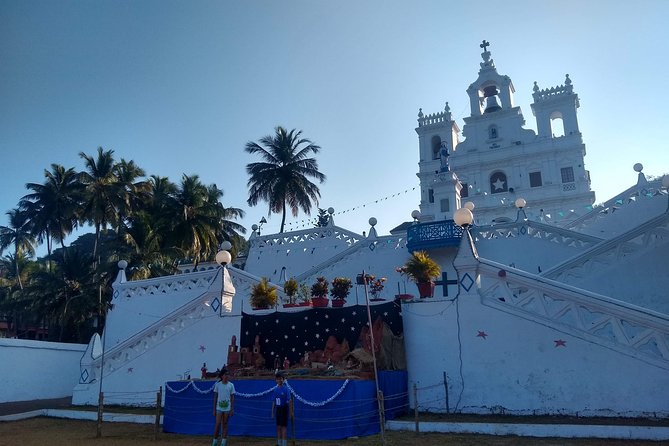
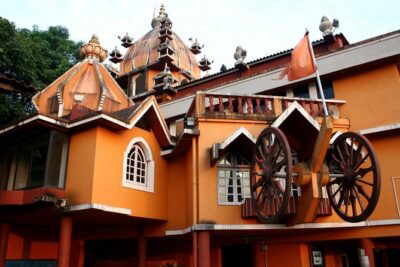
The tour’s first big stop is the Goa State Museum, a standout because it’s not just a museum building—it’s an old power structure repurposed over time. The site is described as having been the summer palace of Adilshah, later used by Portuguese officials. Then, crucially, it’s tied to India’s liberation story through a major event: the hoisting of India’s flag. After that, the building served as a secretariat for the Goa legislative assembly.
That mix of uses matters for your visit because it changes how you read the space. When the guide points out how the building shifted roles across rulers and systems, you start seeing the museum as a living timeline rather than a room full of artifacts.
Time-wise, this stop is about 25 minutes and admission is free on the tour. You’re not getting stuck inside for hours, which I like when you only have a morning. There’s also a real-world comfort bonus mentioned in prior experiences: the museum can be air conditioned, so it works as a break if you’re feeling the heat outside.
What to do here: don’t worry about “finishing” everything like a hardcore museum marathon. Instead, use the 25-minute window for orientation—let the guide’s narrative give you a frame. Then you’ll be better at spotting what you actually want to see if you come back later on your own.
Fontainhas lanes: shell windows, painted tiles, and Portuguese-leaning architecture
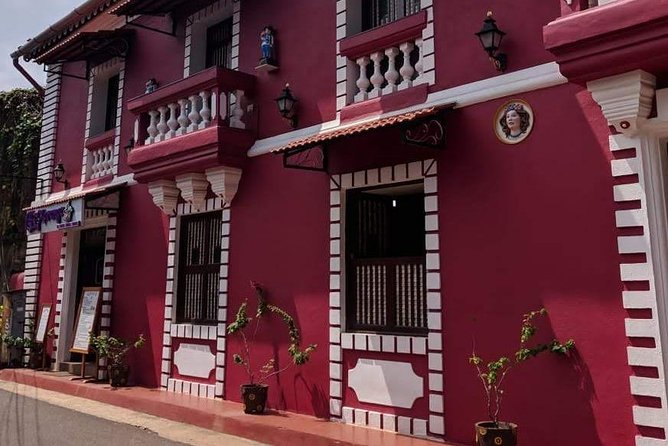
After the museum, the tour shifts into walking mode with Fontainhas—the part of Panaji that many people picture when they imagine old Goa streets. This is where the route feels most like wandering with purpose.
Fontainhas is described as a warren of lanes with vivid colors and Latin architecture style, plus small but memorable details: shell windows and painted Azulejos tiles. Those features aren’t just decoration. They tell you how Portuguese and local influences shaped everyday buildings—doors, windows, facades—things you notice when you slow down.
This stop runs about 40 minutes. Admission is free for this part too, so you’re paying for the guided storytelling and the pacing rather than for entry tickets.
Practical tip: Fontainhas is visually busy, in a good way. To get value out of it, keep your attention on the “small stuff.” Look at window shapes, tile patterns, and the way buildings meet the lane. Those are the clues the guide uses to explain the larger story of Panaji.
And yes, it’s still a walking segment, so comfortable shoes matter more here than at the museum. If you’re the kind of person who stops to take photos every 30 seconds, you’ll want to move a bit slower to keep the group together—but the lanes reward that attention.
Mahalaxmi Temple: a short visit that resets the mood
The final main sightseeing stop is Mahalaxmi Temple, with a visit around 10 minutes and free admission. This is a useful contrast to the museum and the architectural street walk.
Why it works: after you’ve spent time with civic and Portuguese-era layers, the temple offers a quieter, more local rhythm. It’s not long, but it gives you a change of pace so the tour doesn’t feel like nonstop heritage facts.
Consider this stop as a “breather” in your morning. If you’ve been concentrating on buildings and dates, you’ll probably appreciate the brief moment to step into a more spiritual, community-focused setting. Also, because the temple stop is short, you won’t lose too much time if you’re trying to keep your plans tight.
If you’re visiting with photos on your mind, just keep an eye on respectful behavior and any local rules you may see on-site. The tour is built to be brief here, so treat it as a moment, not a full event.
Snack breaks in local cafes and bakeries (and how to use them)
What makes this tour feel like real life—not just sightseeing—is the snack element. Snacks are included, and the tour includes hops to local cafes and bakeries to taste Goa’s authentic savories.
Timing matters. In the middle of walking, a snack stop keeps energy stable, and it gives you a different kind of cultural insight. You’re not learning only through buildings; you’re tasting what people eat in their normal day-to-day routine.
One good way to get the most out of this part is to go open-minded. If you normally stick to one safe food choice while traveling, this is a moment to loosen that rule. Even a small tasting helps you understand local flavors beyond what you’d get from a menu photo.
Also, because the tour includes snacks, you’ll avoid the common travel trap of realizing you forgot to budget for food. You can always buy more if you want, but you’re not forced into it just to survive the walk.
You can also read our reviews of more museum experiences in Goa

Price, pacing, and value of a $12 guided loop

At about $12 for a 2 to 3 hour guided experience, this is one of those deals that only makes sense when you see what’s included. You get:
- A guided walk through Panaji’s key historic areas
- A museum stop at Goa State Museum where admission is free on the tour
- Fontainhas and a temple visit, both with free admission noted for the stops
- Snacks included
- A mobile ticket and group-discount structure
So yes, you’re paying for the guide’s storytelling and the convenience of having your route stitched together. But you’re also getting tangible perks—food and museum access are built in, not tacked on afterward.
The pacing is another value point. At roughly 2 to 3 hours, it’s long enough to feel like you learned something, but short enough that you’re not committing your whole day. And since the tour ends back at the meeting point, you don’t have to solve a “how do I get back?” problem mid-morning.
For best results, plan your morning around a relaxed start. It begins at 8:00 am, meeting at India Post Panjim Head Post Office on MG Road. Starting early usually helps with heat, and it gives you time after the tour to explore more casually.
Who should book?
- People who want Goa beyond beaches and want a city-based cultural hit early in the day
- History and architecture fans who like explanations more than just photos
- First-timers in Panaji who want a guided route to get their bearings fast
Who might not love it?
- If you’re hoping for a long museum session or a deep, slow-paced exploration, the time in each stop is shorter by design.
- If your schedule can’t flex around weather, note that it requires good weather and may shift if conditions aren’t ideal.
Should you book this Panaji city tour with museum visit?
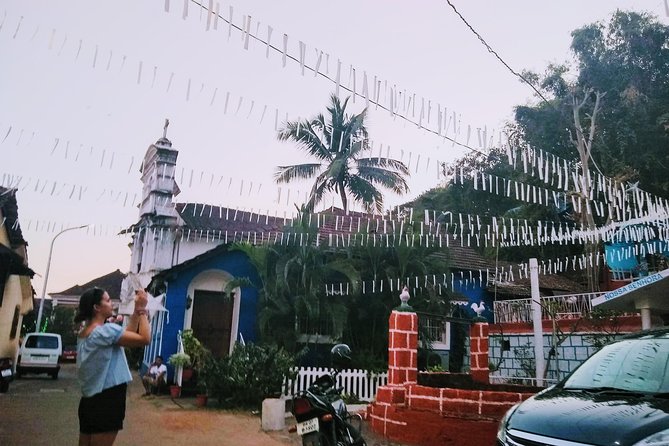
I’d book it if your ideal Goa morning looks like: walk through meaningful lanes, get a guided story that helps buildings click into place, and eat a few local snacks without turning it into a complicated food search. This tour does the practical stuff well—short duration, free admission stops, and snacks included—so the value is straightforward.
I would skip or rethink it only if you hate walking, you want a museum-focused deep dive, or you’re traveling at a time when weather is unpredictable and you can’t change plans. Otherwise, it’s a smart, cost-friendly way to understand Panaji’s layers and leave with better context for everything you do afterward.
FAQ
Where does the tour start?
The tour starts at India Post Panjim Head Post Office, on MG Road, Patto Colony, Panaji, Goa 403001.
What time does the tour begin?
The start time is 8:00 am.
How long is the Panaji City Tour with museum visit?
It runs about 2 to 3 hours (approx.).
Is this tour walking-only?
It is described as a walking tour through Panaji’s bylanes, with stops that include a museum and a temple.
What are the included stops?
The main stops are Goa State Museum, Fontainhas, and Mahalaxmi Temple.
Is the museum admission included?
Yes. Admission tickets for the Goa State Museum stop are listed as free for this experience.
Are snacks included?
Yes. Snacks are included, with stops at local cafes and bakeries to taste Goa’s snacks and savories.
Does the tour include shopping?
No. Shopping is listed as not included.
Is the tour private?
It’s private in the sense that only your group participates.
What is the cancellation policy if weather is bad?
Cancellation is free. You can cancel up to 24 hours in advance for a full refund. The experience also requires good weather; if it’s canceled due to poor weather, you’ll be offered a different date or a full refund.