
REVIEW · GOA
Old Goa: Walking Tour of Heritage Churches
Book on GetYourGuide →Operated by Make It Happen · Bookable on GetYourGuide
Old Goa is church-hopping, but with street-level stories. I love the way guides like Yashasvi turn Portuguese Goa into something you can picture, and I love the small-group pace that makes questions feel normal, not rushed. One heads-up: this is a walking tour inside active religious spaces, so the dress code and shoe choices matter.
You’ll cover the main emotional beats of Old Goa in about 2.5 hours—Portuguese influence, faded ruins, and major churches—without needing to plan a route yourself. Just know that church rules can mean limited photography inside, so keep your phone ready, but ask first if you’re unsure.
In This Review
- Key things that make this Old Goa heritage walk worth it
- Old Goa in 2.5 hours: a practical route through Portuguese power
- Meeting at Viceroys Arch: start point and how to get oriented
- Church of St. Catherine: Portuguese arrivals and the Rome of the East
- Old Goa ruins on the way to Se Cathedral: why the gaps matter
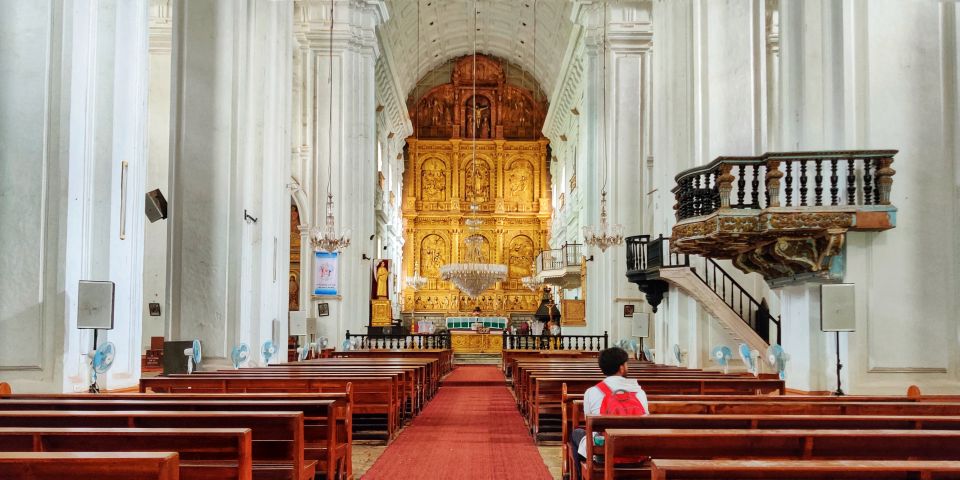
- Se Cathedral: largest in Asia, and bigger than it sounds
- Church of St. Francis of Assisi: frescoes you can actually read
- Basilica of Bom Jesus: St. Francis Xavier’s remains
- The included refreshing drink stop: small break, real value
- What to wear and bring so the churches feel easy, not stressful
- Price and value: why $12 can be a smart spend in Goa
- How the guides shape the experience (names you may recognize)
- Timing and weather reality: Old Goa can surprise you
- Who should book this walking tour, and who should skip it
- Should you book this Old Goa Heritage Churches tour?
- FAQ
- How long is the Old Goa walking tour?
- What does the tour cost?
- Where do I meet the guide?
- Is the tour offered in English?
- How big is the group?
- What’s included in the price?
- What should I wear for the church stops?
- Can I take photos inside the churches?
- Is this tour suitable for infants or toddlers?
Key things that make this Old Goa heritage walk worth it
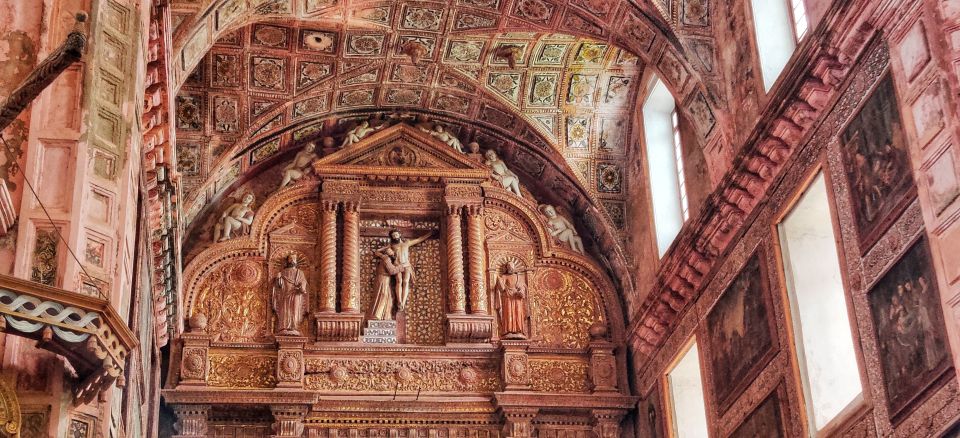
- Portuguese-era stories in plain language, tied to specific churches you can actually see
- St. Francis of Assisi frescoes explained in a way that helps you read what’s on the walls
- Se Cathedral’s scale placed in context, so it doesn’t feel like just another big building
- A included non-alcoholic refreshing drink, helpful during the Goa heat
- Small group size (10 max), which means you’re not a body in a crowd
- Guides with strong local anecdotes (including side stops like a nearby ruined church)
Old Goa in 2.5 hours: a practical route through Portuguese power
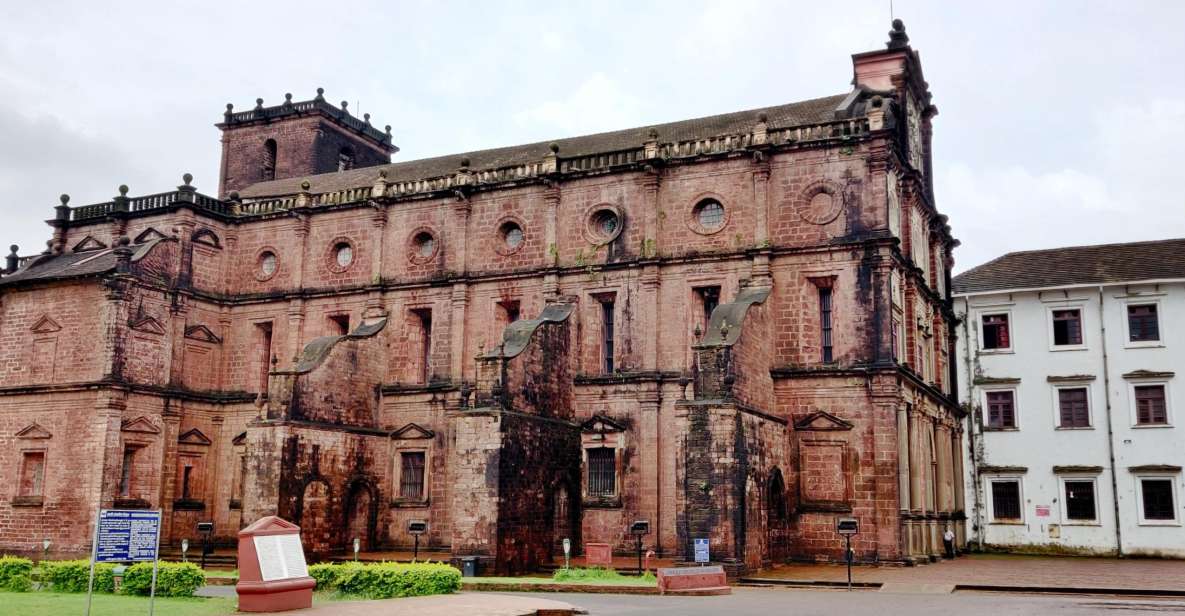
Old Goa can feel like a museum you walk through. This tour keeps it human. You start at Viceroys Arch and then move church to church, which is the easiest way to see the big names without zigzagging on your own.
At $12 per person, the value comes from how much is packed into the time: major monuments, an English-speaking guide, and a mid-walk drink to keep you going. You’re paying mostly for interpretation—because the stones are impressive, but the stories are what make the route stick.
You can also read our reviews of more walking tours in Goa



Meeting at Viceroys Arch: start point and how to get oriented
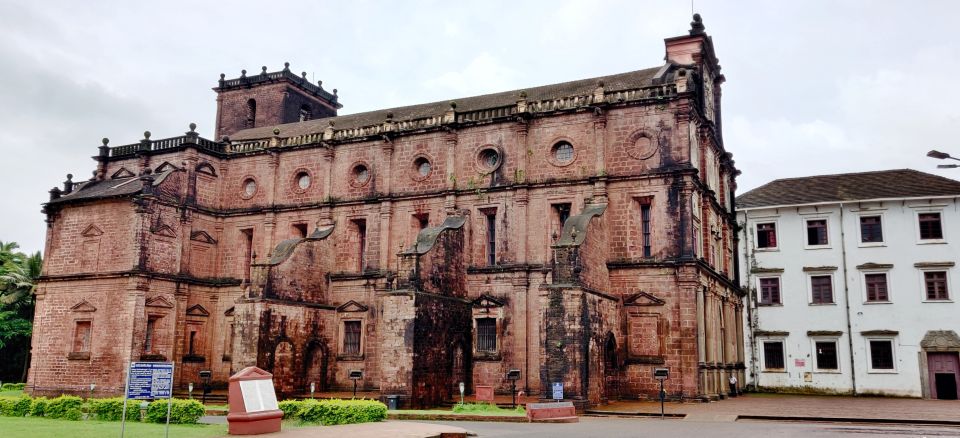
Your tour begins at Viceroys Arch (Velha Goa, Goa 403110). Arrive about 10 minutes early so you’re not joining late while the group is already loading into the walk.
This is also a smart start because it gets you into the Old Goa atmosphere right away—rather than spending your limited hours figuring out where everything is. And since the meeting point is easy by taxi, you can show up with less stress.
Church of St. Catherine: Portuguese arrivals and the Rome of the East
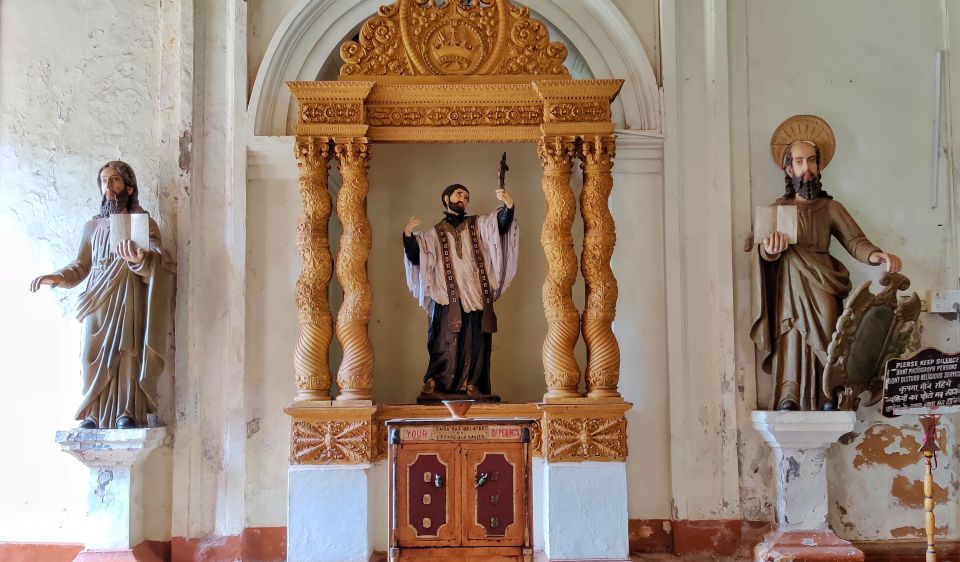
One of the best parts is how the tour frames Portuguese rule as something you can trace through buildings. At Church of St. Catherine, you get the storyline of Portuguese arrival in India, including the phrase they used for the region: the Rome of the East.
Why this matters: it changes how you look at the architecture. Instead of just noticing European-style features, you start asking why these structures were built where they were, and what the Portuguese administration hoped to create.
There’s also a practical rhythm here. The group walks past key points, you get the meaning, then you keep moving. If you like tours that don’t talk for an hour in one spot, this pacing works well.
Old Goa ruins on the way to Se Cathedral: why the gaps matter

Between major stops, the walk passes through the in-between spaces—ruins of Old Goa. Don’t skip the quieter stretches. Those fragments are part of the story because they show change: what endured, what faded, and how Old Goa’s center shifted over time.
Then you head toward Se Cathedral.
Se Cathedral: largest in Asia, and bigger than it sounds
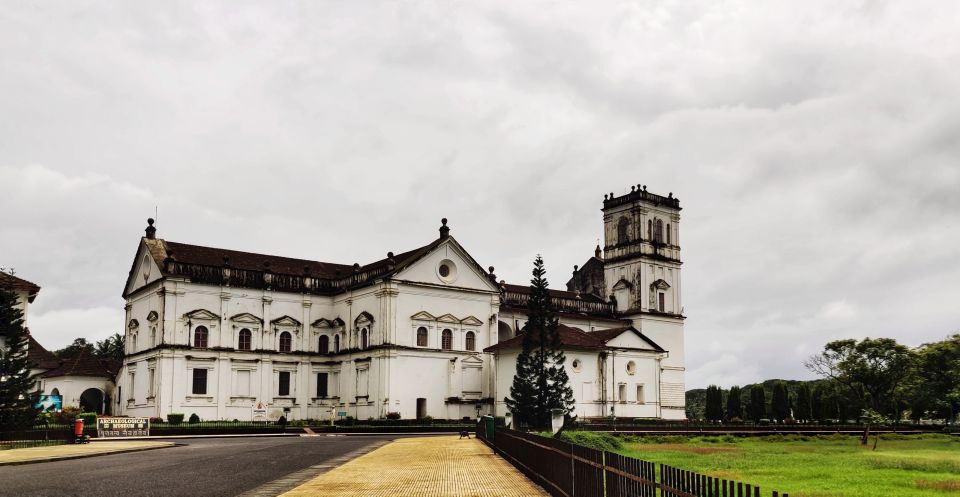
Se Cathedral is the standout scale moment: it’s described as the largest church in Asia. But the tour doesn’t treat it like a trivia win. The guide connects the size to the era’s ambitions—power, faith, and organization all written into stone.
This stop is also where photos can get tricky. You may find that church photography is restricted, and if you’re unsure, you’ll want to ask the guide before you start shooting. It’s an easy rule to follow and it keeps you out of awkward moments.
If you’re the type who likes architecture, you’ll likely appreciate the way the guide helps you notice the details without turning it into a lecture. And if you’re not, you still get a clear sense of why this building became the anchor of the area.
You can also read our reviews of more historical tours in Goa





Church of St. Francis of Assisi: frescoes you can actually read
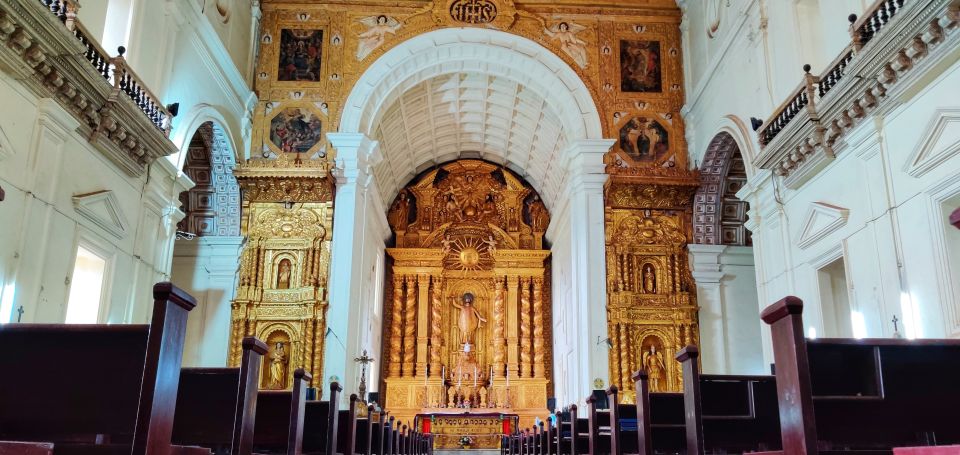
Next is the Church of St. Francis of Assisi, and this is a tour highlight because of the decorative frescoes. The artwork depicts the life of the patron saint, and the guide explains what you’re seeing rather than just pointing and moving on.
Why I think this is the right kind of stop: frescoes can look like “pretty wall art” if nobody helps you decode them. With a guided explanation, you start connecting the scenes to the saint’s story, so the church becomes more than a backdrop for a quick photo.
Dress code can matter here too. You’re asked to cover knees and shoulders, so plan what you’ll wear before you arrive. Comfortable clothes are part of making this enjoyable rather than annoying.
Basilica of Bom Jesus: St. Francis Xavier’s remains
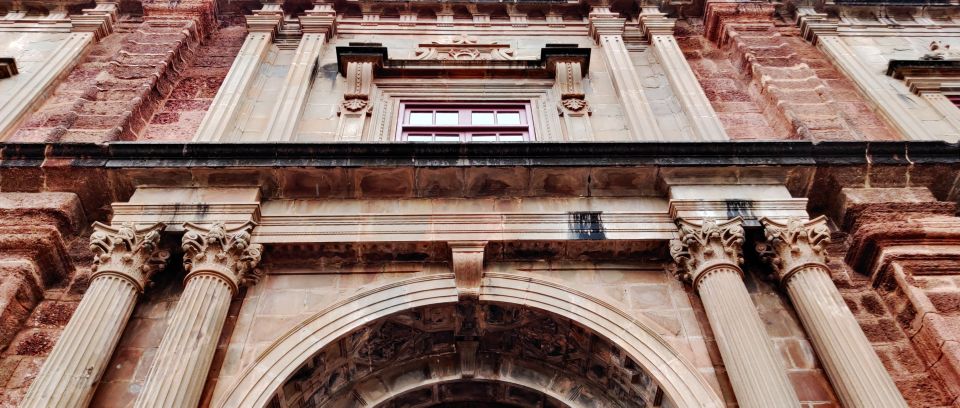
The tour continues into the Basilica of Bom Jesus, where you’ll see the remains of St. Francis Xavier. This is the emotional, respectful payoff: the tour shifts from Portuguese-era explanation to personal significance.
Here’s a useful mindset: don’t try to rush the meaning. Even if you’ve seen photos online, seeing the basilica in person lands differently because it feels like a living place of devotion, not only a historical attraction.
Also watch for rules around photography. The tour notes that picture-taking inside churches and museums may be restricted, so when in doubt, pause and ask your guide.
The included refreshing drink stop: small break, real value
About halfway through, you get a healthy non-alcoholic refreshing drink. In Goa’s heat, that pause is more than a perk. It buys you energy so you can stay present for the second half—especially when you’re walking between church sites.
Some guides also add thoughtful touchpoints like a coconut drink or lime-soda-style refreshment depending on timing and conditions. Either way, it’s a simple way to make the tour feel cared for.
What to wear and bring so the churches feel easy, not stressful
This is one of those tours where preparation pays off fast.
Bring:
- Comfortable shoes (you’ll be walking through Old Goa)
- Comfortable clothes that match the dress expectations
Wear:
- Covered knees and shoulders (dress code in churches)
Plan for:
- Photography restrictions inside churches/museums. If you’re not sure, ask your guide first.
If you forget these basics, you might spend time adjusting clothing instead of enjoying the art, the scale, and the stories.
Price and value: why $12 can be a smart spend in Goa
$12 for about 2.5 hours with an English-speaking guide sounds almost too good—until you think about what’s included. You’re not just buying entrance tickets; you’re buying interpretation and pacing.
This route has several major cultural stops that can take longer when you do it alone, and the tour keeps the walking efficient. The small group size (10 max) also matters because it gives your guide a chance to answer questions without cutting you off every few minutes.
So the value isn’t in luxury. It’s in focus: the right sequence of sights, explained in a way you can follow on your feet.
How the guides shape the experience (names you may recognize)
One reason this tour earns such high marks is the storytelling style. Different guides bring different voices, but the goal stays the same: help you understand what you’re looking at.
You might meet Pawan, who’s noted for strong explanations and memorable pacing, or Vimala De Souza, described as engaging and passionate with a light, thoughtful delivery. You could also get guides like Santoshi, Trancy, or Yashasvi, all praised for turning church architecture and Portuguese influence into personal, human stories.
A nice extra: some guides can point you toward a nearby ruined church walk, like St. Augustine’s uphill, if timing allows after the main tour. That’s the kind of add-on you only get when the guide truly knows the place.
Timing and weather reality: Old Goa can surprise you
This is an outdoor walking tour, even though the highlights are inside churches. Rain can interrupt plans, and you may have to accept that the full circuit isn’t always guaranteed under heavy downpours.
My advice: travel with the mindset that the route is the plan, but your comfort is the priority. If rain starts, go with the flow—your guide will keep the tour as workable as possible.
Who should book this walking tour, and who should skip it
Book it if:
- you want Portuguese Goa explained without reading a textbook
- you enjoy walking tours where the guide helps you notice details
- you like seeing famous religious sites with context, not just a checklist
Skip it if:
- you’re traveling with infants and toddlers (it’s not recommended)
- you don’t want to deal with dress code rules and church entry expectations
- you hate walking on uneven surfaces, even in short loops
If you’re a solo traveler, a couple, or a small family group of older kids, the format fits well—especially because the group stays small and the guide can adapt to questions.
Should you book this Old Goa Heritage Churches tour?
Yes, if your goal is a tight, meaningful circuit of Old Goa’s most important sites with clear guidance. For the money, the guide-led context—Portuguese influence, what the frescoes mean, and why the basilica matters—turns a simple walk into a story you can repeat later.
Don’t book it if you want a relaxed, do-whatever-you-want day with no dress code and no structured sequence. And be ready for the practical side: comfortable shoes, covered shoulders and knees, and a willingness to ask before photographing.
FAQ
How long is the Old Goa walking tour?
It runs for 2.5 hours.
What does the tour cost?
The price is listed as $12 per person.
Where do I meet the guide?
Meet at Viceroys Arch, Goa (Velha Goa, Goa 403110, India). Arrive 10 minutes early.
Is the tour offered in English?
Yes, the tour includes an English-speaking guide.
How big is the group?
It’s a small group limited to 10 participants.
What’s included in the price?
The tour includes an English-speaking guide and a healthy non-alcoholic refreshing drink.
What should I wear for the church stops?
You need to dress appropriately: cover your knees and shoulders.
Can I take photos inside the churches?
Photography inside churches and museums may be restricted. If you’re unsure, ask your tour guide before taking pictures.
Is this tour suitable for infants or toddlers?
No. It’s not recommended for infants and toddlers.