REVIEW · GOA
CULTURAL & HISTORIC DAY TOUR ATTRACTIONS – Churches, Temples & Spice Plantation
Book on Viator →Operated by Crossmiles Travel Pvt. Ltd. · Bookable on Viator
Goa’s mix of faith happens fast. In 6 to 8 hours, you’ll walk through Portuguese-era streets, step into Old Goa’s major churches, then shift gears to a key Hindu temple before ending at a tropical spice plantation with lunch and herbal tea.
I really like how the route stays walkable, with short, focused stretches that help you read the city instead of speeding past it. I also like the stop that could be a throwaway—spice plantation—because you get food, herbal tea, and a look at how spices grow, not just a quick photo stop.
One thing to plan around: it’s a full day, and the midday plantation meal is part of the experience—if you’re sensitive to rich food or heat, pace yourself and keep water handy so you don’t feel off later in the day.
In This Review
- Key takeaways before you go
- A day tour that strings Goa’s Portuguese and Hindu worlds together
- Timing, pickup, and how the 6–8 hour day really feels
- Panjim Heritage Walk: cobblestones, colorful buildings, and Mandovi River context
- Fontainhas: the old Latin Quarter with Portuguese influence
- Old Goa and Bom Jesus: a former Portuguese capital made of stone
- Mangeshi Temple: the Hindu anchor after the church stops
- Tropical Spice Plantation: herbal tea, lunch, and how to shop without regrets
- Value check: is $100 a good deal for this mix of sites?
- Best fit for your travel style (and who should skip it)
- Should you book this tour?
- FAQ
- How long is the tour?
- What stops are included in the day?
- Is pickup offered?
- Is lunch included?
- What’s the group size?
- Do I need to buy tickets for the sites?
- Will I get a mobile ticket?
- What if the weather is bad?
- What if the minimum number of travelers isn’t met?
- Can I cancel for a refund?
Key takeaways before you go
- Five stops, one storyline: Panjim to Fontainhas, then Old Goa, Mangeshi Temple, and the spice plantation.
- Short walks, not marathon pacing: you’ll get city texture without spending all day on your feet.
- Food is included at the plantation: fresh lunch plus herbal tea is built into the flow.
- Small group size: up to 15 travelers, which keeps it easier to move and ask questions.
- Expect a real cultural mix: Catholic churches and Portuguese colonial architecture side-by-side with Hindu worship at Mangeshi.
A day tour that strings Goa’s Portuguese and Hindu worlds together
This isn’t a single-theme day. It’s a day about how Goa became Goa—Catholic churches and Portuguese colonial architecture in one pocket, Hindu temples in another, then a plantation stop that grounds everything in agriculture and everyday local life. The pace is built so you see big landmarks plus the smaller details that make them make sense.
If you’re trying to get your bearings fast, the combination works well. You start in Panjim (often spelled Panaji), move through the old Latin Quarter area of Fontainhas, then head to Old Goa for the heavy-hitters, and you end with the senses-on-full display of spice growing and lunch.
You can also read our reviews of more historical tours in Goa

Timing, pickup, and how the 6–8 hour day really feels
The tour runs about 6 to 8 hours, which is long enough to feel like you’ve done something substantial without turning into an all-day suffering contest. Pickup is offered, and you’ll be in a group capped at 15 travelers, so you’re not stuck in a huge crowd shuffle.
You’ll also spend time traveling between stops. That sounds obvious, but in Goa it matters because road conditions and traffic can change how tight your schedule feels—especially if you’re departing from a cruise area or have a fixed return time. The good news: the itinerary is built around short visits (most stops are about an hour), so you’re not constantly waiting around.
Panjim Heritage Walk: cobblestones, colorful buildings, and Mandovi River context
Your day begins in Panjim (Panjai), the state capital of Goa, along the Mandovi River. This is where you get an orientation to the city’s layout and its “present-day” face, before the tour pulls you deeper into colonial-era sites.
The heritage walk is designed to be easy to follow. You’ll see cobblestone streets and colorful villas and buildings that reflect the city’s Portuguese influence. It’s a good warm-up stop because it sets up what you’ll notice later in Fontainhas and Old Goa—like how architecture and faith show up together in daily life.
Fontainhas: the old Latin Quarter with Portuguese influence
Next comes Fontainhas, known as the old Latin Quarter of Panjim. This area keeps Portuguese influence in a way that feels visual: narrow lanes and picturesque architecture.
I like this stop because it’s not just a landmark check. It’s the kind of place where your eyes start connecting dots—where the city’s colonial story becomes visible in everyday streets. You’ll get a walking tour here too, so plan for short walks and sun protection. This is also the kind of stop where your guide’s storytelling can turn buildings into context.
Old Goa and Bom Jesus: a former Portuguese capital made of stone
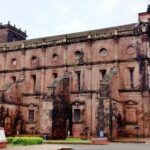
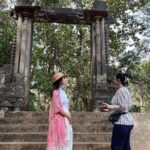
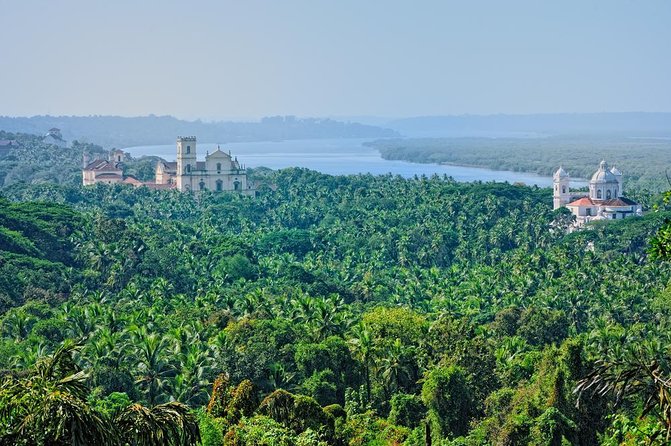
Then you head to Old Goa (Velha Goa), beside the Mandovi River. This is historically big territory: it was the former capital of Portuguese India, and it’s known for colonial-era monuments.
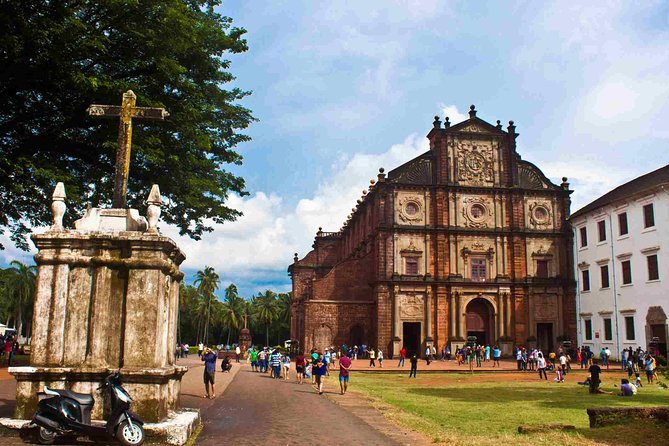
One standout is the Basilica of Bom Jesus. Even if you’re not chasing religious architecture as a hobby, this kind of site hits because it’s meant to last. The day is smartly paced here too: you’re in and out for about an hour, which keeps Old Goa from turning into an exhausting drag while still giving it weight.
A practical tip: Old Goa is where you’ll likely do more photo-thinking than photo-sprinting. Take your time looking at the façade details, then save your biggest shots for when you have light and space.



Mangeshi Temple: the Hindu anchor after the church stops
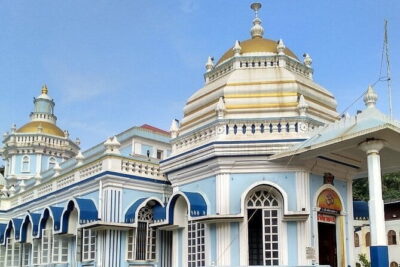
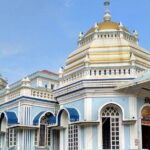
After Portuguese churches and colonial monuments, you switch to Shri Mangesh Temple in Mangeshi Village (Priol, Goa). This temple is described as one of the largest and most frequently visited in Goa, which matters because it’s not an afterthought stop.
I like this contrast stop. You’ll feel the change in atmosphere because the setting and purpose are different. It’s also a good moment to understand Goa as a place where multiple faith traditions exist side-by-side—not just as a museum of old stories.
Tropical Spice Plantation: herbal tea, lunch, and how to shop without regrets
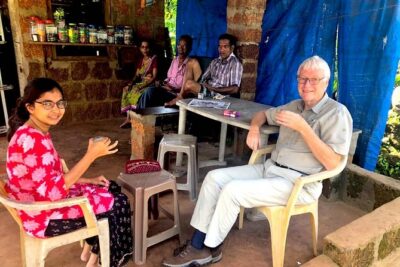
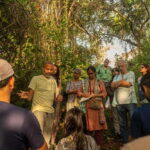
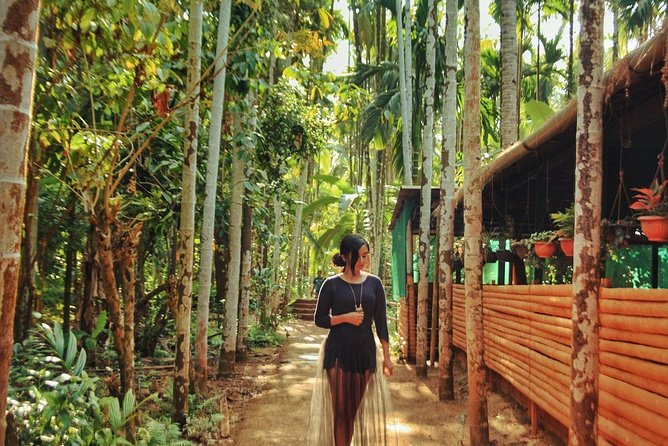
The last major stop is the Tropical Spice Plantation, where fresh food and herbal tea are included. This is the practical payoff of the day: the tour slows down enough for you to connect history and architecture to agriculture—how people actually grow what later becomes cuisine and trade.
The plantation visit includes a tour component and then an included lunch. Some people love the plantation experience as a highlight because of the friendly handling, food, and the way it shows spices growing. Others find it a shorter loop as part of the meal package. Either way, it’s still a worthwhile end cap because the whole point is sensory and physical: you see plants, you learn what they’re used for, and you eat what the plantation wants to represent.
Shopping tip: if the gift shop is part of your plan, set yourself a budget before you step in. Spice souvenirs can add up quickly, and the spice market setup can tempt you into buys you didn’t intend. If you’re unsure what’s useful, ask about what the spices are meant for in cooking—you’ll get better value.
Value check: is $100 a good deal for this mix of sites?
At $100 per person, the value comes from the structure: you’re not paying for one attraction. You’re paying for transport between multiple core locations, a guided day, and—most importantly—the plantation experience with included food and herbal tea.
Also, admission is listed as free for the first four stops (Panjim Heritage Walk, Fontainhas, Old Goa, and Mangeshi Temple), and the spice plantation is listed as included. That’s meaningful. It means the money isn’t just going to tickets—it’s mainly covering your time, guide, and the organized flow that saves you from coordinating all of these places on your own.
If you’re only in Goa for a short window, this format is efficient. If you have lots of free days and love deep, solo wandering, you might prefer to break these into separate outings. But for a “hit the big points” day, the package makes sense.
Best fit for your travel style (and who should skip it)
This tour is a good match if you want:
- A single-day overview that connects Catholic Portuguese landmarks with Hindu temple culture
- Short guided walks that don’t eat your whole energy budget
- A final stop that turns education into a meal—spices plus lunch plus herbal tea
It’s less ideal if:
- You hate schedule intensity and tight timing
- You need very long stays at individual sites instead of doing several in a day
- You’re extremely sensitive to heavy meals (the midday lunch is part of the experience, so you’ll want to pace yourself)
Should you book this tour?
Yes—if you want a guided day that gives you context, not just photos. The biggest reason to book is the mix: Panjim and Fontainhas for the Portuguese-touched street life, Old Goa for the heavy church history, Mangeshi Temple for the Hindu anchor, and a spice plantation that ends with real food and herbal tea.
Book it if you only have one day to spend in Goa and you want your time to feel organized. If your schedule is extremely fixed or you’re worried about vehicle comfort and timing from a cruise area, ask in advance how the day is handled on port days so you’re not surprised by vehicle sharing.
FAQ
How long is the tour?
It runs about 6 to 8 hours.
What stops are included in the day?
You’ll visit Panjim Heritage Walk, Fontainhas, Old Goa, Mangeshi Temple, and a Tropical Spice Plantation.
Is pickup offered?
Yes, pickup is offered.
Is lunch included?
Yes. Food and herbal tea are part of the experience at the Tropical Spice Plantation, and lunch there is included.
What’s the group size?
There’s a maximum of 15 travelers.
Do I need to buy tickets for the sites?
For the stops listed with admission ticket Free (Panjim Heritage Walk, Fontainhas, Old Goa, and Mangeshi Temple), admission is indicated as free. The Tropical Spice Plantation stop includes its visit.
Will I get a mobile ticket?
Yes, there is a mobile ticket.
What if the weather is bad?
This experience requires good weather. If it’s canceled due to poor weather, you’ll be offered a different date or a full refund.
What if the minimum number of travelers isn’t met?
If the tour is canceled because the minimum isn’t met, you’ll be offered a different experience/date or a full refund.
Can I cancel for a refund?
Yes, you can cancel up to 24 hours in advance for a full refund. If you cancel less than 24 hours before the start time, the amount paid won’t be refunded.