REVIEW · GOA
Panjim Heritage Walk for a cultural immersion in Goa
Book on Viator →Operated by 5 Senses Walks · Bookable on Viator
Goa’s history shows up street by street. This heritage walk is a smart 3 hours in Panaji, mixing Portuguese-era neighborhoods with both Hindu and Catholic landmarks, and keeping you fueled with snacks along the way. I also love that the group stays small (up to 10), so your guide can actually answer your questions instead of racing you through photos.
My favorite part is how the stops connect the past to what you see today, from Fontainhas to the Church of Our Lady of the Immaculate Conception. One consideration: this experience needs good weather, so plan for a flexible day if the forecast looks rough.
In This Review
- Key takeaways before you walk Panaji
- A 3-hour route through Panaji’s Portuguese and Indian corners
- Where the walk starts near Municipal Garden
- Fontainhas: Portuguese lanes and early Panaji settlement context
- Sao Tome Old Quarter square: tobacco trade to civic power
- Maruti Temple: a quiet cultural reset for the walk
- Church of Our Lady of the Immaculate Conception: sailors, 1541, and film-famous views
- Price and what you actually get for $30
- Small-group attention: why it changes how Panaji feels
- Practical tips for a smoother Panaji walk
- Who should book this Panaji Heritage Walk?
- Should you book the Panaji Heritage Walk?
- FAQ
- How long is the Panaji Heritage Walk?
- How much does it cost?
- Is the group size limited?
- What’s included in the tour price?
- Do you need to pay entry fees at the stops?
- Where does the tour start?
Key takeaways before you walk Panaji
- A small-group pace (max 10) that makes the history feel personal, not scripted
- Fontainhas as the starting point, with Portuguese residential quarters and early settlement context
- Sao Tome’s square backstory, from tobacco trading over the river to later civic uses
- Two faith landmarks in one route, including Maruti Temple and a major Catholic church
- No entry fees for the stops, so your money stays focused on the guide experience
- Coffee/tea plus snacks, helpful in Goa’s heat when you’re walking for hours
A 3-hour route through Panaji’s Portuguese and Indian corners
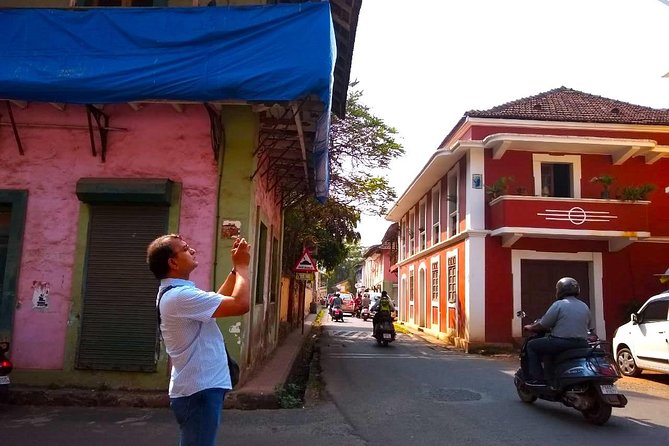
This is a guided heritage walk built for people who want more than a quick look at landmarks. You’re walking through the areas where Portuguese influence shaped the city, then finishing with religious sites that show Goa’s layered culture. It’s not about sitting in a vehicle and hearing facts over speakers. It’s about seeing, asking, and connecting details to street life.
The schedule is tidy and realistic for a short day: around 3 hours total, with brief stops so you stay energized. Each stop is listed with free admission, which matters because it keeps the itinerary smooth. You’re not paying extra at every corner, and you can spend your attention on what the guide is pointing out.
Also, you’ll return to the meeting point at the end. That’s a small detail, but it makes planning your next activity easier.
You can also read our reviews of more walking tours in Goa


Where the walk starts near Municipal Garden
You’ll meet at Garcia de Orta (FRXH+Q44), near Municipal Garden, Panaji. This is useful because it’s an obvious reference point, and it’s close to public transportation. There’s no pick-up or drop-off included, so you’ll want to plan your own route in and out.
If you’re staying somewhere in Panaji, this is usually straightforward. But if you’re coming from farther away, give yourself extra time to reach the meeting spot—especially if you don’t know the area yet. A heritage walk goes best when you arrive early enough to settle in and start at a relaxed pace.
The tour uses a mobile ticket, which is convenient if you like to keep everything on your phone.
Fontainhas: Portuguese lanes and early Panaji settlement context
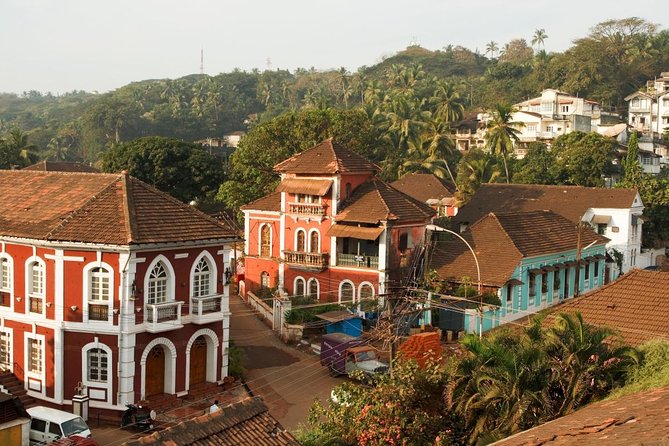
You kick off in Fontainhas, known as the Latin quarter. This is the part of Panaji that helps the Portuguese story feel grounded and local, not like museum history. The neighborhood is described as residential quarters created for Portuguese bureaucrats and servants, and it’s also noted as one of the earliest settlements in the city.
What makes this stop worth your attention is the way the guide frames architecture and street layout as evidence of how people lived. In other words, you’re not just looking at buildings—you’re learning why these areas were formed and how that history shaped daily life.
You’ll have about 30 minutes here, which is enough time to listen and still take in the feel of the lanes. If you like photos, you’ll probably want to pause for a few moments, but keep an eye on your group so you don’t get left behind.
Watch-out: because Fontainhas is a walking area, wear footwear that handles uneven ground and curving streets. It’s a short stop, but it’s still real pavement underfoot.
Sao Tome Old Quarter square: tobacco trade to civic power
Next is the Sao Tome Old Quarter, built around a square with a name tied to trade. The story goes that the square got its name from tobacco trading over the river. Later, the area served as a police headquarters, and it also relates to customs and mint work.
That sequence—trade, enforcement, revenue—helps you understand how Goa’s capital functioned over time. It’s a reminder that cities aren’t only shaped by religion and culture. They’re also shaped by economics and authority.
This stop also runs about 30 minutes. At this point, you’ll likely start noticing how your guide connects details across locations. The Portuguese quarters you saw in Fontainhas aren’t floating in a vacuum; they connect to the broader city system.
One practical upside: since admission is free, you don’t lose time at entry steps. You’re spending that time listening, looking around, and getting oriented.
Maruti Temple: a quiet cultural reset for the walk
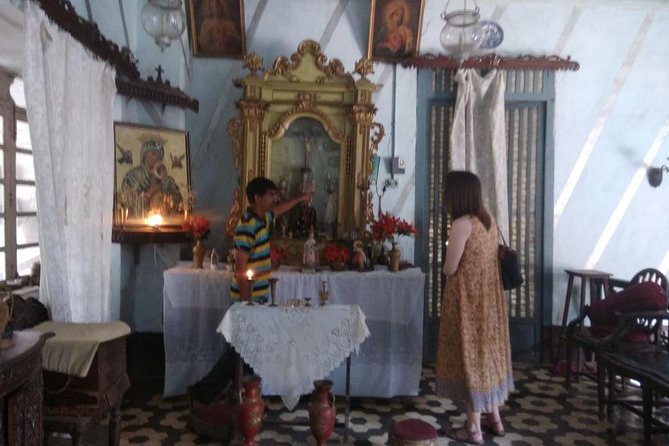
Then the itinerary shifts from Portuguese-era neighborhoods to a Hindu landmark: the Maruti Temple, dedicated to Lord Hanuman, often called the monkey God. This is a short stop (about 15 minutes), but it’s an important change of pace.
Why I like this kind of stop on a heritage walk: it prevents the experience from becoming only one-style history. Goa isn’t just Portuguese Catholic architecture. It’s also deeply Hindu, and that shows up in daily worship and local identity.
Even with a brief time window, a guide-led explanation can help you read what you’re seeing. You’ll likely understand the temple’s significance beyond the surface visuals, and you’ll get a sense of how different communities coexist within the same city grid.
Consideration: temples can have clothing expectations and rules about where you can stand. The tour listing doesn’t spell out specifics, so bring a safe approach: cover shoulders and keep your hands and feet in good shape for walking in and out respectfully.
You can also read our reviews of more historical tours in Goa






Church of Our Lady of the Immaculate Conception: sailors, 1541, and film-famous views
The final stop is the Church of Our Lady of the Immaculate Conception. It’s one of the most recognizable images tied to Goa, even if you’ve never visited—because the church is often used to represent Goa in Bollywood films.
Here’s the historical context that makes the church more than a photo spot: it was constructed on this hill for sailors in 1541, and it happened after demolishing an older temple. That alone gives you a strong sense of how the city changed with new power centers and new religious communities.
You’ll have about 30 minutes at this stop, which works well for both the story and the views. Even if you’re not a religious architecture expert, it’s the kind of place where background helps you notice shape, placement, and why this location mattered to sailors arriving by sea.
Because the listing says no entry fees are required, you can focus on the guide’s explanation without thinking about cost at the door.
Price and what you actually get for $30
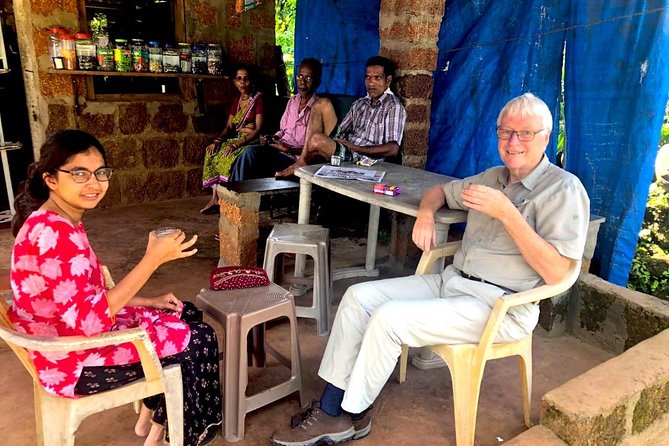
At $30 per person, this walk sits in the range of a solid short guided outing, especially for a cultural route with multiple stops. The price isn’t just paying for a guide’s time—it also covers the practical basics that make the experience smoother.
What’s included:
- Professional guide
- Coffee and/or tea
- Snacks to keep you fueled during the walk
- Entrance charges (and the stops are presented as free-entry points)
What’s not included:
- Pick up and drop
So the value equation is pretty clear: you’re paying for walking structure, local context, and small-group attention, plus the refreshments that stop the day from feeling like work. If you were to do the same stops on your own, you’d still spend time figuring out what to look for. Here, you get the guidance built in.
Also, the average booking window is 61 days in advance, which suggests it’s popular enough that you’ll want to plan ahead rather than hoping for last-minute availability.
Small-group attention: why it changes how Panaji feels
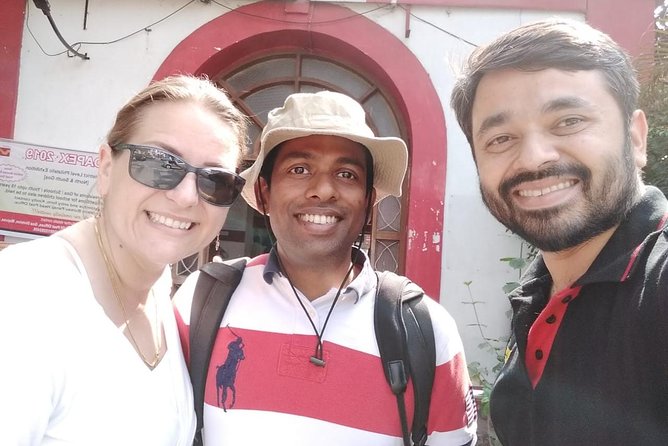
A max group size of 10 isn’t just a comfort perk. It changes how much you get from the guide. When there’s less noise and fewer people, your guide can slow down for questions, point out small details, and keep the tone more conversational.
That matters on a heritage walk, because the best parts are often the bits you only catch if someone explains them. Instead of a long list of dates, you get a story you can follow from place to place: Portuguese administration in Fontainhas, civic authority and trade in Sao Tome, then religious life at Maruti Temple and the church.
This is also where the snacks and tea make a difference. You’re not starting to feel hungry halfway through. Your energy stays stable, and you notice more.
Practical tips for a smoother Panaji walk
Here are the things I’d plan for if you want an easy day:
- Shoes matter. You’re walking around older neighborhood streets, and you’ll want comfort for the full 3 hours.
- Arrive a bit early at the Garcia de Orta meeting point near Municipal Garden so you can match the group easily.
- Bring a light layer if you run cold indoors, but expect warm outdoor weather. Goa can feel intense when you’re on your feet.
- Watch the weather. The experience requires good weather, and poor weather can trigger a change or refund.
- Plan your own transportation. There’s no pick-up/drop, so you need to get yourself to the meeting point.
One more small tip: keep your phone charged. A mobile ticket is great, but you don’t want it at low battery on a busy street.
Who should book this Panaji Heritage Walk?
This is a great fit if you want a culture-first walk with structure and local storytelling. It’s also ideal if you like seeing how Portuguese influence blends into modern Goa, without ignoring other traditions like the Maruti Temple.
You’ll probably enjoy it most if:
- you want a short guided experience rather than a full-day tour
- you like walking and photos, but don’t want to spend hours hunting for context
- you prefer small groups and real explanation
- you’re interested in Panaji as a lived city, not just a stop on a list
If you’re someone who hates walking, this might feel a little long. But for most people who can handle a few kilometers across a city center, the pace is manageable.
Should you book the Panaji Heritage Walk?
I’d book it if you want a compact, guided way to understand Panaji’s mix of Portuguese-era quarters and major local religious sites. The route covers key neighborhoods and landmarks, and the inclusions (snacks, coffee/tea, professional guide) mean you’re not constantly managing your own logistics.
The main reason not to book is simple: you’re traveling on a day with questionable weather, or you don’t want a walking-focused plan without transport help. If the forecast looks good and you can reach Garcia de Orta near Municipal Garden on your own, this is a strong value at $30 for a small-group heritage experience.
FAQ
How long is the Panaji Heritage Walk?
It’s about 3 hours.
How much does it cost?
The price is $30.00 per person.
Is the group size limited?
Yes. The maximum group size is 10 travelers.
What’s included in the tour price?
Coffee and/or tea, a professional guide, snacks, and entrance charges.
Do you need to pay entry fees at the stops?
No entry fees are required for the listed stops.
Where does the tour start?
It starts at Garcia de Orta, near Municipal Garden, Panaji, Goa 403001, and it ends back at the same meeting point.