
REVIEW · GOA
Saligao Village Saunter by Make It Happen
Book on Viator →Operated by Make It Happen · Bookable on Viator
Goa’s quiet side starts at 4 pm. This Saligao village saunter is a smart, guided way to see Indo-Portuguese streets, a chapel-and-cemetery setting, and even a Gothic church, all without getting stuck on the usual beach-and-markets route. I love the built-in high tea at a local heritage home, hosted by the owners, because it turns architecture into a lived-in experience rather than just photos.
I also like the small-group feel, with a professional guide who keeps the pace easy and the story clear. One thing to consider: this experience runs outdoors and depends on good weather, so plan on moving your schedule if rain rolls in.
In This Review
- Key points at a glance
- A 4:00 pm Saligao saunter: why this timing feels right
- Saligao’s Indo-Portuguese streets: what you’re really looking at
- The walk begins near Mae De Deus Church (and why that matters)
- The Gothic-style church stop: Goa gets a curveball
- Wards, homes, and paddy fields: the village pace you’ll want
- Saligao’s chapel-and-cemetery setting: quiet, important, and visual
- Saligao Institute: a practical landmark in a pattern-rich area
- High tea at a Portuguese-style heritage home: the tour’s best payoff
- Small group size and pace: why this feels personal
- Price and value: what $14.54 really buys you
- Logistics that actually matter: ticket, weather, and timing
- Who should book this, and who might skip it
- Should you book the Saligao Village Saunter?
- FAQ
- What is the duration of the Saligao Village Saunter?
- What time does the tour start?
- Where does the tour meet?
- Is transportation included?
- Is the afternoon tea included?
- How big is the group?
- Will I need a paper ticket?
- What happens if the weather is poor?
- Can I cancel and get a full refund?
- Is this tour suitable for most people?
Key points at a glance

- Indo-Portuguese wards on foot with chapel, cemetery, and homes you can actually look at up close
- Goa’s Gothic-style church stop that gives you a different architectural angle
- Owner-hosted afternoon tea inside a heritage home, plus a show around the property
- Small group size (max 15) for more personal attention from your guide
- Narrow lanes + paddy views so the walk feels like a real village, not a staged attraction
- Short, focused timing (about 2.5 hours) that fits cleanly into an afternoon plan
A 4:00 pm Saligao saunter: why this timing feels right

This tour starts at 4:00 pm, which I think is the sweet spot in Goa. You’re past the hottest part of the day, but you’re not rushing into an evening that feels like it’s all dark and drop-offs. The result: you can actually enjoy the walking and take in details on the homes and lanes instead of just power-walking for shade.
The whole experience runs about 2 hours 30 minutes, and it stays focused. That matters in a place like Saligao, where the best moments are small—doorways, church settings, lane layouts, and how people have lived alongside the architecture for generations.
You can also read our reviews of more tours and experiences in Goa.



Saligao’s Indo-Portuguese streets: what you’re really looking at
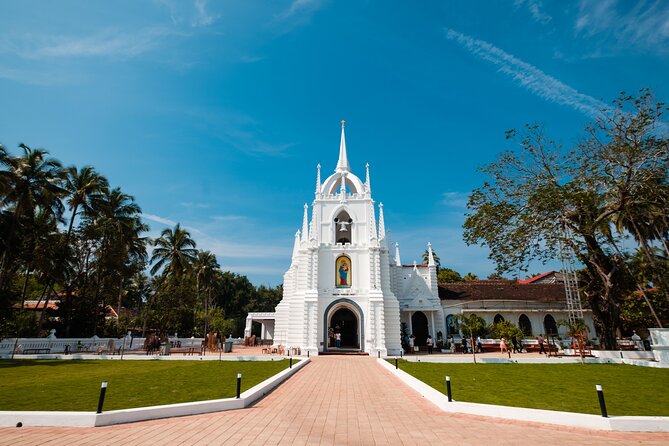
Saligao is known as one of Goa’s more prosperous villages, shaped by early settlers with business sense. On the ground, you feel that prosperity in the way the village developed: the residential areas are made of distinct wards—small neighborhood pockets—lined with Indo-Portuguese homes, and punctuated by religious landmarks.
As you walk, you’re not just staring at buildings. You’re learning how the village’s layout works: narrow walking lanes, colorful edges, homes that show a mix of styles, and open sightlines toward paddy fields. It’s the kind of place where the architecture reads like a map. One turn can show you a different tone—quiet, religious, residential, then unexpectedly open to fields and hills.
The walk begins near Mae De Deus Church (and why that matters)

Your meet point is Mae De Deus Church (Chogm Rd, Muddavaddi, Saligao). Starting here is useful because it places you right in the village rhythm from the start. You don’t waste time doing a long transfer or getting oriented somewhere else—your guide can start pointing out key details immediately.
Also, this tour is described as near public transportation, which makes it easier to build into your day. If you’re relying on local buses or rides shared with others, this type of starting location tends to save stress.
The Gothic-style church stop: Goa gets a curveball

One highlight is a visit to Goa’s only Gothic style church. That’s a big detail, because it signals that Saligao isn’t only Indo-Portuguese in the generic sense. You get a distinct church style contrast, which helps you understand the range of influences that show up in this part of Goa.
Practically, expect this to be a stop where your guide helps you notice what makes it different—shape, style cues, and how the church fits into the village setting. The value here isn’t just the label. It’s that you learn to spot architectural differences with your own eyes, instead of treating every old building like the same postcard.
Wards, homes, and paddy fields: the village pace you’ll want
After the church component, the route moves through Saligao’s wards—flanked by fields, with Indo-Portuguese homes lining the lanes. This section is where you see the village as lived space. Instead of a checklist of monuments, you get a sense of neighborhood geography.
A few specific things to pay attention to as you go:
- Homes and lane scale: the lanes can feel tight, and that closeness is part of the charm—don’t rush through it.
- Paddy and hill views: you’ll catch open stretches where the village breathes out into agricultural land.
- Contemporary Goan art and architecture: there’s also mention of more modern expressions, so the tour doesn’t lock you only into the past.
If you like walking tours that teach you how to see (not just where to stand), this is the section that will reward you most.



Saligao’s chapel-and-cemetery setting: quiet, important, and visual
Saligao’s religious and memorial landmarks are part of what makes the village feel distinctive. The tour includes a chance to see the Indo-Portuguese church cluster—including a chapel and a cemetery—as you move through the residential wards.
This stop isn’t about big dramatic views. It’s about atmosphere and context. In Goa, religious sites often sit in the flow of daily life, not behind fences in a theme-park zone. If you stay observant here—notice how the church spaces sit beside homes and paths—you’ll come away with a better sense of how architecture and routine overlap.
Saligao Institute: a practical landmark in a pattern-rich area
Another named landmark is the Saligao Institute, located in the residential wards among Indo-Portuguese mansions. It’s the kind of reference point that helps you mentally map the village as you go.
What I like about including landmarks like this is that it gives the guide a place to anchor explanations—why certain lanes develop where they do, what the residential wards look like from different angles, and how the village’s prosperity shows in the built environment.
If you tend to get disoriented on foot, this section helps you keep your bearings fast.
High tea at a Portuguese-style heritage home: the tour’s best payoff
The highlight for me is the owner-hosted high tea at a local Indo-Portuguese home. This isn’t just a quick snack. You visit a beautiful Indo-Portuguese property, get a show around, and then enjoy tea in the home with the people who actually live with the architecture.
Why that matters: you’re not just consuming food. You’re getting a glimpse of how the home works—how rooms connect, what the property feels like inside, and how heritage homes are kept and used today. That’s the difference between a photo stop and an experience.
Your guide also plays a role here by keeping the visit coherent and tying the architecture back to what you saw outside. The result is a nice loop: lanes and churches outside, then the home interior where those same style cues become real.
Small group size and pace: why this feels personal
This tour caps at 15 travelers (a small group by any Goa standard). In practical terms, that means you get fewer people competing for attention and the guide can slow down for questions.
One review-worthy detail I’d especially watch for: a guide who pays attention to small things—like local trees and plants—and keeps things friendly, even for families. That tells me the tour isn’t stiff or lecture-heavy. It’s designed to be approachable and comfortable.
If you want a guided walk where you can actually ask what something is and not feel like you’re shouting over the group, this size helps.
Price and value: what $14.54 really buys you
At $14.54 per person, this is priced like a budget-friendly afternoon activity. The key question is value: is it just a cheap walk, or do you get enough for the money?
You do, mainly because high tea at a heritage home is included—hosted by the owners—and that kind of add-on usually makes tours jump in cost. You also get:
- Professional guided walking through multiple village highlights
- Architecture-focused stops (Indo-Portuguese structures plus a Gothic-style church)
- Time in a home setting, not only outdoor photos
Add it up and the pricing makes sense for an experience that combines guided storytelling with an included food component. If your plan is already tight, this is one of the easier ways to buy “quality time with context” rather than paying extra for standalone tastings later.
Logistics that actually matter: ticket, weather, and timing
You’ll use a mobile ticket, which is convenient and reduces hassle on the day. Duration is about 2 hours 30 minutes, and since it starts at 4 pm, you can pair it with a late dinner plan right after.
Weather is the bigger swing factor. The experience requires good weather, and if conditions are poor it can be canceled or moved (with a refund or a different date offered). Since you’ll be walking in village lanes, check the forecast the morning of and pack accordingly.
Who should book this, and who might skip it
I’d book it if you like:
- architecture that you can see and compare in real life
- slower village walking where details matter
- included food that’s part of the story, not an afterthought
- small-group guides who keep things personal
You might skip it if:
- you strongly prefer beach scenery or museum-heavy days
- you want a long, all-day itinerary (this is an afternoon walk)
- rain and wet walking would ruin your mood
Should you book the Saligao Village Saunter?
Yes, if you’re trying to get beyond the standard Goa circuit. For the money, you get a guided path through Indo-Portuguese wards, a named stop for Goa’s only Gothic style church, and a genuinely different ending: high tea in a heritage home hosted by the owners. That combination is rare at this price point.
If your schedule allows flexibility for weather and you’re okay with a couple of hours of village walking, this is an easy yes for an afternoon that feels local.
FAQ
What is the duration of the Saligao Village Saunter?
It runs for approximately 2 hours 30 minutes.
What time does the tour start?
The start time is 4:00 pm.
Where does the tour meet?
The meeting point is Mae De Deus Church on Chogm Rd, Muddavaddi, Saligao, Goa 403511, India.
Is transportation included?
No. Private transportation is not included.
Is the afternoon tea included?
Yes. Coffee and/or tea is included, along with high tea hosted at a local Indo-Portuguese home by the owners.
How big is the group?
The maximum group size is 15.
Will I need a paper ticket?
No. The tour uses a mobile ticket.
What happens if the weather is poor?
The experience requires good weather. If it’s canceled due to poor weather, you’ll be offered a different date or a full refund.
Can I cancel and get a full refund?
Yes. Free cancellation is available up to 24 hours in advance of the experience’s start time.
Is this tour suitable for most people?
Most travelers can participate.