
REVIEW · GOA
Old Goa Heritage Walk by Make It Happen
Book on Viator →Operated by Make It Happen · Bookable on Viator
Old Goa tells its story in stone and paint. This guided Portuguese-heritage walk focuses on how the area shaped under Portuguese rule, with stops at major church sites and the landmark Viceroy’s Arch. For the price, I love that the essentials are handled for you: the entry fees are included and you get an Old Goa heritage map to keep using after the tour.
I also like that the experience is built around a human guide, not a rushed script. You’ll move as a small group (up to 20), and the pacing stays flexible so you can ask questions and actually look at details like baroque wall paintings and carved wood. One consideration: some big churches may be closed when you go, so your guide may adjust the route to keep the story going.
In This Review
- Key highlights before you start
- Portuguese Old Goa in 2½ hours: why this walk works
- Meeting at Viceroy’s Arch and finding the right pace
- Stop 1: Church of St. Francis of Assisi and its baroque details
- Stop 2: Viceroy’s Arch—Old Goa’s gateway moment
- Stop 3: Church of Our Lady of the Rosary (and the World Heritage link)
- If churches are closed: how the guide keeps the story moving
- Included value: maps, English host, and entrance fees
- What to wear and bring (because churches have rules)
- Group size and why private attention still feels personal
- Who should book this Old Goa Heritage Walk
- Should you book this Old Goa Heritage Walk?
- FAQ
- How long is the Old Goa Heritage Walk?
- Where does the tour start?
- Where does the tour end?
- What’s included in the price?
- Do I need to pay entry fees at the churches?
- What should I wear to enter the churches?
- Is the tour group large?
- Is air-conditioning or snacks included?
- What is the cancellation policy?
Key highlights before you start
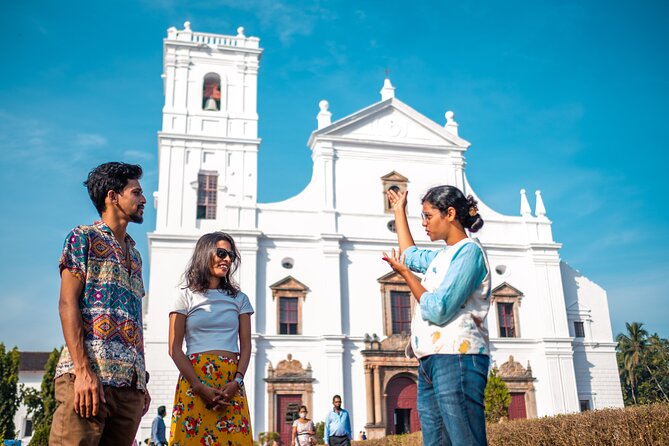
- Entry fees included for the church visits, so you’re not hunting for tickets mid-walk
- Old Goa heritage map that helps you orient yourself after the tour
- Church dress code (knees and shoulders covered) so plan your outfit early
- Viceroy’s Arch as the gateway view from the Mandovi riverfront
- Baroque details at St. Francis of Assisi including wall paintings and intricate woodwork
- World Heritage connection at Our Lady of the Rosary, tied to Goa’s church-and-convent complex
Portuguese Old Goa in 2½ hours: why this walk works

Old Goa is the kind of place where you can see a church from the street and still miss the point. This walk fixes that. The guide connects the buildings to the Portuguese era: who built what, what the churches looked like, and how the style reflects the time. Instead of treating the trip like a checklist, you get the “why” behind the stones.
The time is realistic too. About 2 hours 30 minutes is long enough for a meaningful loop, yet short enough that you won’t feel trapped in a full-day tour. And because the guide stays with you the whole way, you’re not left standing around wondering what you’re looking at.
You can also read our reviews of more walking tours in Goa


Meeting at Viceroy’s Arch and finding the right pace

You start at Viceroys Arch, Old Goa—a spot that’s easy to find and makes a great opening “frame” for the rest of the walk. From here, the guide can talk about how Old Goa functioned as a city and how the Mandovi riverfront ties into daily life and arrivals.
In practice, the pacing is built for walking without drama. Expect short time “inside” each key stop, plus time for narration and for stepping back to notice architectural details. If you’re visiting during warmer hours, pick an earlier departure when you can. In the past, 8:30 AM slots have been described as a smart way to avoid the sun getting too oppressive.
No air-conditioning is part of the deal. So if you’re the type who sweats on day one, bring water and go easy on layers. The walking is the whole point.
Stop 1: Church of St. Francis of Assisi and its baroque details
This is the kind of church where the inside rewards slow looking. The Church of St. Francis of Assisi is described as baroque in style, with wall paintings and intricate woodwork. Even if you’ve never cared much about art history, you’ll likely feel the difference once you’re standing in front of the surfaces the guide points out.
What you’ll actually do here is simple: enter, observe, listen, and let the guide translate the visual language. The baroque style can feel busy on your own, but with a guide guiding your eyes, it turns from “pretty” into “I get what they’re trying to show.”
Dress code matters. Knees and shoulders need to be covered to enter churches. If you show up in shorts and a tank top, you may have trouble getting in. Plan your outfit so you can step through the doorway without stress.
Stop 2: Viceroy’s Arch—Old Goa’s gateway moment
The Viceroy’s Arch is a classic “pause here and re-orient” stop. This majestic archway marks a main entrance to Old Goa from the Mandovi riverfront. It’s not just a photo target. It’s a visual cue for the city’s layout and its relationship to movement—people coming in, people going out, and the sense of entry into the Portuguese-era core.
When guides do this stop well, it changes how you see everything afterward. Instead of treating the churches as separate sights, you start to think about Old Goa as a planned space: entrances, streets, religious institutions, and how the Portuguese built power into public architecture.
Stop 3: Church of Our Lady of the Rosary (and the World Heritage link)
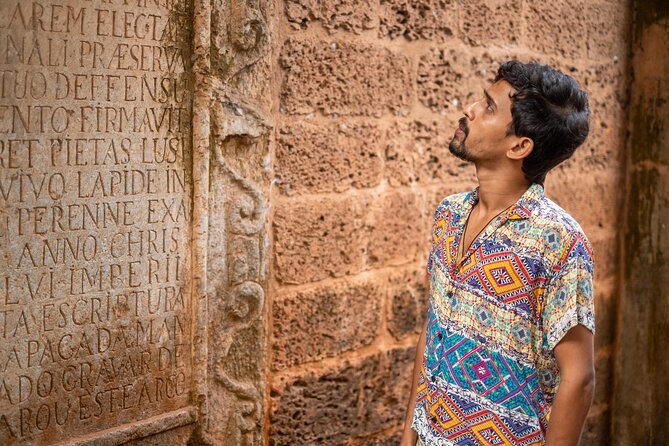
If you love architecture, this is one of the stand-out stops on the walk. The Church of Our Lady of the Rosary is described as both beautiful and historically significant for Old Goa. Even better: it’s part of the collection tied to the World Heritage Site of churches and convents of Goa.
That World Heritage connection isn’t just trivia. It helps you understand why the area feels like more than random old buildings. It’s part of a broader heritage system—religious architecture connected across sites, shaped by the same Portuguese influence.
The visit is timed so you don’t burn your energy, and you don’t get bored. You’ll likely spend most of your time focused on what’s distinctive about the façade and interiors, while the guide places the church into the larger story.
You can also read our reviews of more historical tours in Goa





If churches are closed: how the guide keeps the story moving
Here’s the one real “maybe” in your control. Some major church sites can be closed on your tour day. One experience included closures affecting Sé Cathedral and Basilica Bom Jesus, and the guide adjusted by taking the group to St Augustine Tower instead.
So instead of worrying about a single fixed checklist, go in expecting your guide to manage the day. Your best move: stay flexible and ask the guide what changed and why. That’s when the tour becomes more than a fallback plan—it becomes a living history lesson.
Included value: maps, English host, and entrance fees
At $12.27 per person, the biggest value isn’t the low price. It’s what’s bundled in.
You’re getting:
- a friendly English-speaking host
- an Old Goa heritage map
- entrance fees included
That last part matters more than it sounds. Church visits often have small ticket costs that add up, and they can interrupt your momentum. Here, you keep moving. You also get a map you can use after you finish, which helps you keep the sense of place rather than walking away with only a mental blur of domes.
The guide names popping up in past groups—like John Ferrão, Vimala, Yashasvi, Santoshi, Pawan, Mugdha, and Amreen—all point to one trend: the tour succeeds because the guide talks like a storyteller and answers questions directly. If you like stopping to ask why something is built a certain way, this style fits you.
What to wear and bring (because churches have rules)

The church dress code is not optional: you need to cover knees and shoulders. Plan your outfit before you leave the hotel. Light layers help, especially if you’re visiting in the morning and then heating up later.
Good shoes are also a smart move. Even if you don’t do long distances, this is still a walking heritage route on uneven surfaces. Comfort beats fashion here.
What’s not included: snacks (and there’s no mention of an air-conditioned vehicle). So bring water. If you get low on energy easily, have a small snack before you start. You can also plan to snack afterward since the tour ends back at the meeting point.
Group size and why private attention still feels personal
This walk is capped at a maximum of 20 travelers. That’s a comfortable number for a walking tour. You’re not stuck behind a wall of hats.
Even more important is how the guide handles questions. Multiple guides have been praised for being patient and for adjusting to different ages and needs. If you’re traveling with mixed ages, you’ll probably appreciate the flexibility.
And because it’s centered on a few core sites, you don’t feel like you’re sprinting between locations. You’ll spend time where it matters: looking at details and learning the connections.
Who should book this Old Goa Heritage Walk
Book this if:
- you’re short on time in Goa and want a fast way to understand Old Goa’s Portuguese influence
- you enjoy churches but want help reading what you see
- you like guided storytelling more than self-guided wandering
- you want something affordable that still includes key costs (like entry fees)
It’s also a good match for first-time visitors who want orientation. Old Goa can feel complex at street level, but the map plus the guiding narrative helps you connect the dots.
If you’re the type who hates walking, then this might not be for you. It’s a heritage walk, not a sit-down history lecture. You’ll be on your feet most of the experience.
Should you book this Old Goa Heritage Walk?
Yes, if you want a compact, high-value overview of Portuguese Old Goa through churches and architecture. The combination of entry fees included, an Old Goa heritage map, and a real guide makes the price feel fair in a way that cheap tours sometimes don’t.
Pick this especially when you can choose an earlier start time. Then dress for church rules on day one, wear comfortable shoes, and go in ready to look closely rather than just photo quickly. If a major church is closed, don’t panic—your guide should adjust and keep the story coherent. That flexibility is part of what makes the experience work.
FAQ
How long is the Old Goa Heritage Walk?
It runs for about 2 hours 30 minutes.
Where does the tour start?
The tour starts at Viceroys Arch, Goa Old Goa, Goa 403402, India.
Where does the tour end?
It ends back at the meeting point (Viceroys Arch).
What’s included in the price?
The tour includes a friendly English-speaking host, an Old Goa heritage map, and the entrance fee.
Do I need to pay entry fees at the churches?
No. Entrance fees are included, so you shouldn’t need to pay separate ticket costs for the stops listed.
What should I wear to enter the churches?
You must cover your knees and shoulders to enter churches.
Is the tour group large?
The tour has a maximum of 20 travelers.
Is air-conditioning or snacks included?
No. Air-conditioned vehicle and snacks are not included.
What is the cancellation policy?
You can cancel for a full refund up to 24 hours in advance. If the tour is canceled due to poor weather, you’ll be offered a different date or a full refund.