REVIEW · GOA
Old Goa Churches, Temples & Spice Plantation With “Goan” Lunch
Book on Viator →Operated by Discover Activities · Bookable on Viator
One day, three faiths, and spice on the menu. This private tour strings together Old Goa’s biggest church sights, a spice plantation lunch break, and the 400-year-old Mangeshi Temple, all with a local guide and hotel pickup. If you want to see more than just the beach strip, this is a solid way to get a real sense of how Goa’s Catholic and Hindu worlds sit side by side.
I especially like the mix of UNESCO-level churches and a working Hindu temple, not just a checklist of monuments. I also like the practical touches: bottled water, a buffet-style Goan lunch included, and a private car so you’re not stuck waiting on other groups. One thing to keep in mind: you’ll be walking through religious sites, and the dress rules are strict—no shorts or sleeveless tops inside.
If you’re trying to keep costs ultra-low with your own driver, this may feel steep compared to DIY. A single review even called out the price as too high for what felt like a driver-only setup—so go into it expecting more than transport: you’re paying for a guide-led route plus lunch and included entry where noted.
In This Review
- Key things to know before you go
- The rhythm of your Old Goa + spice plantation day
- Se Cathedral: the 1619 façade that dominates Old Goa
- Basilica of Bom Jesus: where UNESCO fits into everyday faith
- St. Augustine’s Tower: quick stop, film-familiar look
- Tropical Spice Plantation: lunch in greenery, not a rushed buffet line
- Mangeshi Temple: the 400-year-old finish with Lord Shiva
- Hotel pickup, free entry notes, and what’s actually included
- Price and value: when $89 feels fair and when it doesn’t
- Who this Old Goa + spice plantation tour suits best
- Should you book it?
- FAQ
- What time does the tour start?
- How long is the experience?
- Is pickup included?
- What’s included in the price?
- Do I need to follow a dress code?
- Is this tour available for cruise ship passengers?
Key things to know before you go
- Private hotel pickup plus a dedicated car keeps your day moving smoothly.
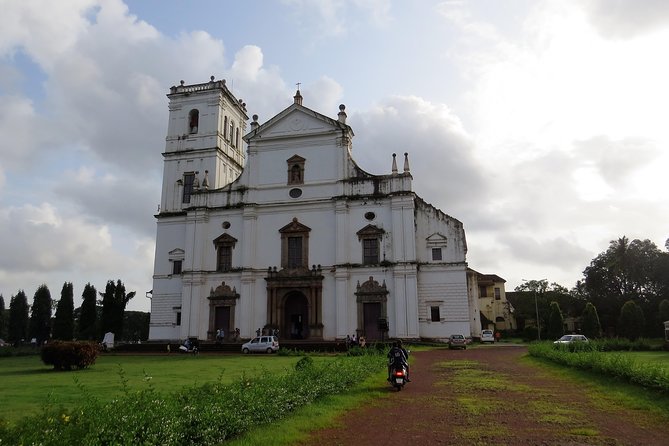
- Se Cathedral (1619) is a standout with an Iberian façade and big, airy interiors.
- Bom Jesus is UNESCO-listed, and it’s one of the most meaningful church stops in Old Goa.
- St. Augustine’s Tower is quick and famously used in Bollywood filming.
- Tropical Spice Plantation gives you a break in shade and greenery, with lunch on site.
- Mangeshi Temple closes the loop with Lord Shiva devotion and a water-feature setting.
The rhythm of your Old Goa + spice plantation day
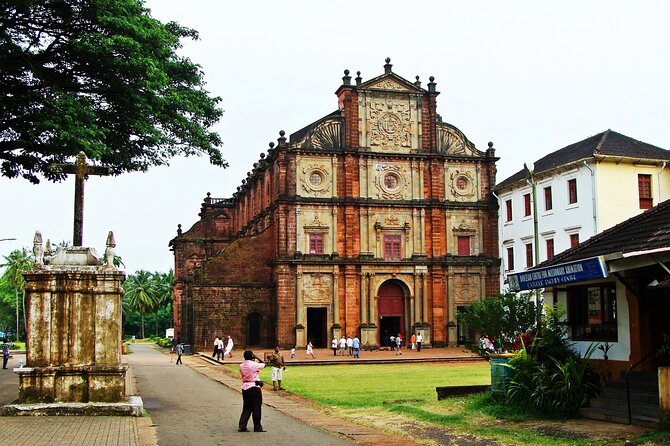
This is a 5 to 6 hour private experience starting at 10:00 am. You’ll get picked up from your hotel and travel in a private car driven by a friendly driver, with a local guide handling the “what am I looking at?” part of the day. The tour is designed to feel like a guided circuit, not a long slog of random sightseeing.
The big value for most people is how much gets packed in without feeling rushed. You hit several key Old Goa landmarks in the morning, then you shift gears into the calm of a spice plantation for lunch. After that, you end at a Hindu temple—so the day doesn’t just read like Portuguese-era postcard history.
Practical note: bottled water and a buffet lunch are included. Food beyond that isn’t included unless specified, so if you like extra drinks or snacks, plan for them. Also check the dress code before you leave your hotel: smart casual is required, and no shorts or sleeveless tops are allowed inside religious places.
You can also read our reviews of more tours and experiences in Goa



Se Cathedral: the 1619 façade that dominates Old Goa
Your first stop is Se Cathedral, built in 1619 AD. It’s described as the largest church in Asia, and it’s easy to see why people remember the outside first: it has a strong Iberian façade and a massive sense of scale.
What you’ll get here is the classic “this is why Old Goa mattered” moment. The cathedral’s design language ties back to the long period when Portuguese influence shaped the city. Even if you’re not an architecture geek, the contrast between the exterior grandeur and the interior spaces is usually what lands.
Time-wise, this stop is about 30 minutes, and the “free admission ticket” detail matters. You’re not paying extra at each church gate on the way through the day—your cost is wrapped into the tour.
Possible snag: if you’re traveling in hotter months, cathedral stops can still feel long if you’re scanning every detail. Wear breathable clothes (but remember the no-shorts, no-sleeveless rule inside), and plan to move at a steady pace rather than trying to rush photos in every corner.
Basilica of Bom Jesus: where UNESCO fits into everyday faith
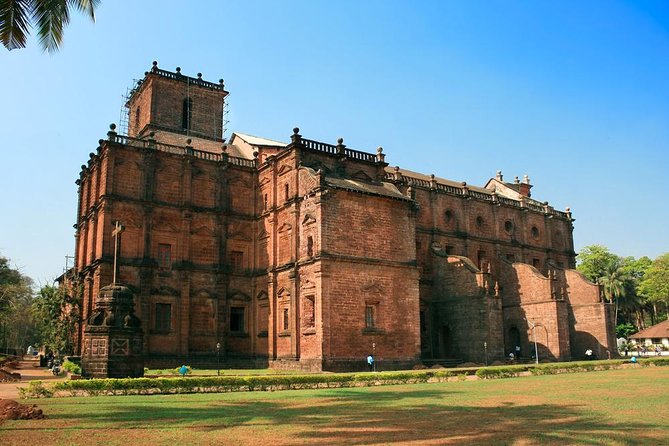
Next up is the Basilica of Bom Jesus, a church site with about 400 years of cultural and religious significance. This is the one that’s been declared a UNESCO World Heritage Site.
This stop is more than a label on a map. In a single morning, you see how Portuguese Catholic power left deep marks in Goa—and you also see how Goa’s religious life never became only one thing. The value of this basilica is that it’s both a monument and a living religious space, and your guide can help connect the dots between colonial influence and what still feels Goan in day-to-day faith.
Your timing here is also about 30 minutes, with free admission noted. That makes it easier to keep the day balanced: you get a meaningful stop without sacrificing your lunch break later.
If you’re short on patience for church interiors, focus on a few things rather than everything. Pick one “anchor detail” to look for—facades, ceiling height, or a key interior feature—and let the rest be background. Your guide can point you to what’s worth the extra look.
St. Augustine’s Tower: quick stop, film-familiar look
St. Augustine’s Tower is next, and it’s a 20-minute stop. It’s a favorite for people who recognize it from Bollywood. Even if you don’t watch much Indian cinema, you’ll probably spot why it gets used as a visual backdrop: it has that tall, dramatic profile that reads instantly on camera.
This isn’t meant to be your longest stop of the day. Think of it as a visual palate cleanser after Bom Jesus—same Old Goa setting, different “angle” on how the built environment gets reused in popular culture.
Quick tip: since it’s brief, don’t wait until the end to pull out your camera. If you want the best shots, you’ll get more usable photos by arriving ready and moving calmly rather than stopping every few steps.
Tropical Spice Plantation: lunch in greenery, not a rushed buffet line
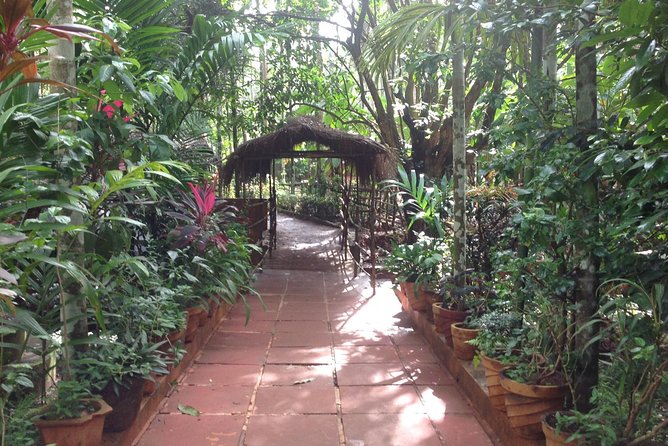
Then you shift from churches to a Tropical Spice Plantation. You’ll spend about 2 hours here, and the admission ticket is included.
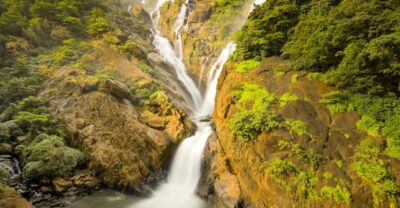
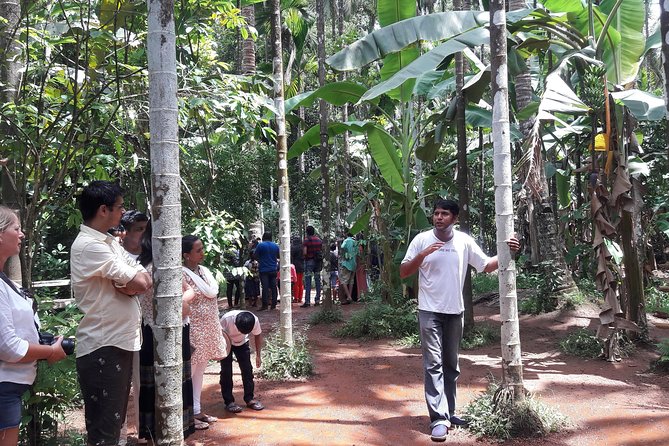
What makes this portion work is that it’s a change in pace. You’re not just walking past historical façades; you’re standing in an environment where spices and tropical plants are part of the story. The setting is described as calm and green, with birds around, a stream, and plenty of walking options—like strolling through beetle nut plantations.
Lunch is built into this stop: a lip-smacking meal and a buffet-style Goan lunch are included, with the tour stating lunch on a fixed menu basis. That’s an important detail. It means you should treat lunch as part of the tour’s schedule, not a restaurant choice you can customize. If you have food restrictions, this is the moment to confirm how the fixed menu works for you—your tour includes lunch, but it may not be tailored.
Some reviewers also highlighted the day’s educational angle, and that usually shows up most during the plantation segment. This is where a guide can explain what you’re actually seeing (plants you can name, scents you can identify, and the role of spices in Goa’s economy and culture). Even without a deep agriculture background, the “hands-on feeling” of the space makes the explanations easier to remember.
Small consideration: plantation time can include walking. You don’t have to do every path, but bring comfortable footwear you can stand in, and keep an eye on your sun exposure.




Mangeshi Temple: the 400-year-old finish with Lord Shiva
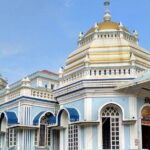
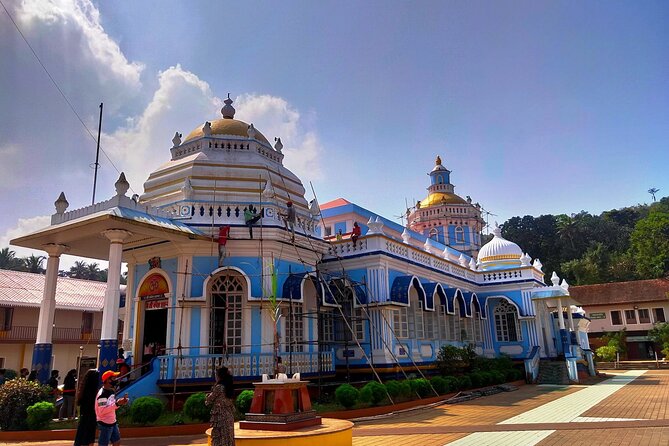
Your tour ends at Mangeshi Temple, dedicated to Lord Shiva. It’s described as 400 years old and known for its simple beauty and a refreshing water body setting.
This final stop matters because it changes the tone of the day. Earlier stops are steeped in Portuguese-era Catholic influence. At Mangeshi, you’re looking at a long-established Hindu site, and the tour frames it as a symbol of Goa’s heritage—before Portuguese colonization and continuing alongside it.
Time-wise, it’s about 30 minutes, with free admission noted. That’s enough to take in the setting, observe the devotional atmosphere, and get a sense of how architecture and environment shape worship. You’ll also want to respect the dress rules here—this is not a place for casual “beach outfit” photos.
If you’re the type who likes a smooth ending, this stop is a good match. It feels like a thoughtful conclusion rather than another rushed landmark.
Hotel pickup, free entry notes, and what’s actually included
Here’s the core structure you’re paying for:
- Pickup offered and a private car with a driver
- Tour guide
- Bottled water included
- Buffet lunch included (fixed menu basis)
- Free admission tickets noted at Se Cathedral, Bom Jesus, St. Augustine’s Tower, and Mangeshi Temple
- Spice plantation admission included
That package is what makes the tour feel different from a basic driver rental. You’re not only buying transport. You’re buying someone to connect the why behind the what—especially helpful when you’re moving quickly across religious sites with very different styles and meanings.
Also note: the tour is private, meaning only your group participates. That usually helps if you want questions answered without competing with a big group’s pace.
Price and value: when $89 feels fair and when it doesn’t
At $89 per person, this is not a bargain-basement activity. The value depends on what you want from the day.
If you care about:
- guided context at multiple major sites,
- hotel pickup and a dedicated driver,
- lunch included with bottled water,
…then the pricing starts to make sense. You’re effectively bundling car + guide time + lunch + entries (as noted) into one price, which reduces hassle and decision fatigue.
On the flip side, if you’re hoping for a driver who just “takes you places” with minimal explanation, you’ll probably feel the price more sharply. One review basically argued it was overpriced for what felt like private-driver-only service. That’s a real risk for any paid guided tour: your value rises or falls with the quality of the guide interaction.
My practical advice: during the booking, look for details about what the guide provides (language, focus, and flexibility). On the day, use your time early—ask your first questions within the first hour. If the guide doesn’t respond with real substance, you’ll feel it fast.
Who this Old Goa + spice plantation tour suits best
This tour is a strong fit if you:
- want a culture day away from the crowded beach scene,
- like seeing both church history and Hindu heritage in one route,
- prefer hotel pickup over figuring out transit on your own,
- enjoy learning through a local guide rather than reading captions alone.
It’s also a good choice for first-timers who want structure. The stops are timed and paced so you aren’t spending half the day on transit or wandering.
A few “plan ahead” points:
- Dress smart casual and remember the no shorts/no sleeveless rule inside religious sites.
- The minimum drinking age is 21 years. If your lunch plans involve alcohol, keep that in mind.
- The tour is not available for cruise ship passengers, so if that’s your situation, you’ll need another option.
Should you book it?
If you want a guided, well-paced day that blends Old Goa’s major churches with a spice plantation lunch and then ends at Mangeshi Temple, I’d book it—especially if you’ll appreciate explanations about how Catholic and Hindu traditions shaped the region.
If you’re traveling with a very tight budget, or you’re the kind of person who’d rather hire a driver and move at your own pace with no guidance, you might feel the cost more than the experience delivers. In that case, you can still enjoy Old Goa—but you’ll want to build the day yourself and be confident about your transport and timing.
My bottom line: book it when you value a local guide’s interpretation and an included meal. Skip it when you’re only looking for transport with no interest in the stories behind the sites.
FAQ
What time does the tour start?
The tour starts at 10:00 am.
How long is the experience?
It runs about 5 to 6 hours.
Is pickup included?
Yes. Pickup is offered from your hotel.
What’s included in the price?
The tour includes a private car, a tour guide, bottled water, and lunch. Admission tickets are noted as free for the churches and included for the spice plantation.
Do I need to follow a dress code?
Yes. The dress code is smart casual, and you cannot wear shorts or sleeveless tops when entering religious places.
Is this tour available for cruise ship passengers?
No, it is not available for cruise ship passengers.