REVIEW · GOA
Panjim: Guided Walk Tour of Portuguese-Influenced Goa
Book on GetYourGuide →Operated by Yo Tours · Bookable on GetYourGuide
Go slow, and Goa tells you more. This guided walk focuses on Portuguese-influenced Panjim, with real storytelling behind the streets you’re seeing and the buildings you’re passing. I like how the tour balances architecture with everyday life, so it’s not just facts on a wall.
Two stops make this feel special right away: the walk through Fontainhas Latin Quarter and the sense of Indo-Portuguese heritage homes tucked into the lanes. You also get a smooth set of short breaks—church, hill views, a gallery stop, a café tasting—so you can keep enjoying even if history isn’t your main hobby.
The main drawback to plan for is physical: it’s a 2-hour walking tour with uphill sections at Altinho Hillock, so you’ll want comfy shoes and a bit of stamina. One more small thing: the guide’s voice can be quiet at times, so it helps to stand where you can hear clearly.
In This Review
- Key highlights worth caring about
- Portuguese Goa in Two Hours: what this walk really gives you
- Starting at Panjim Church: the first landmark and the tone
- Altinho Hill and the Archbishop’s Palace area: the view + the climb
- Old High Court area: colonial-era power in plain sight
- The art gallery stop: Scandinavian meets local Goa
- Visitor center + traditional village section: context you can feel
- Fontainhas Latin Quarter: the main event for photos and people-watching
- Chief Minister’s residence (exteriors): quick, useful perspective
- A view point + local café food tasting: rest without losing momentum
- Ending at Maruti Temple, Altinho: calm finish with a hilltop mood
- Price and value: is $14 worth it?
- Logistics that actually matter: meeting point, walking, and what to wear
- Who this tour suits best (and who should pass)
- So, should you book? My straight answer
- FAQ
- FAQ
- How long is the Portuguese-influenced Goa guided walk?
- What does the tour include?
- Where does the tour start?
- Where does the tour end?
- Is the tour all walking?
- Is there an uphill part of the route?
- What languages are spoken by the guide?
- Is the tour wheelchair accessible?
- What should I bring?
- What’s not included in the price?
Key highlights worth caring about
- Portuguese-era storytelling tied to specific buildings instead of vague background
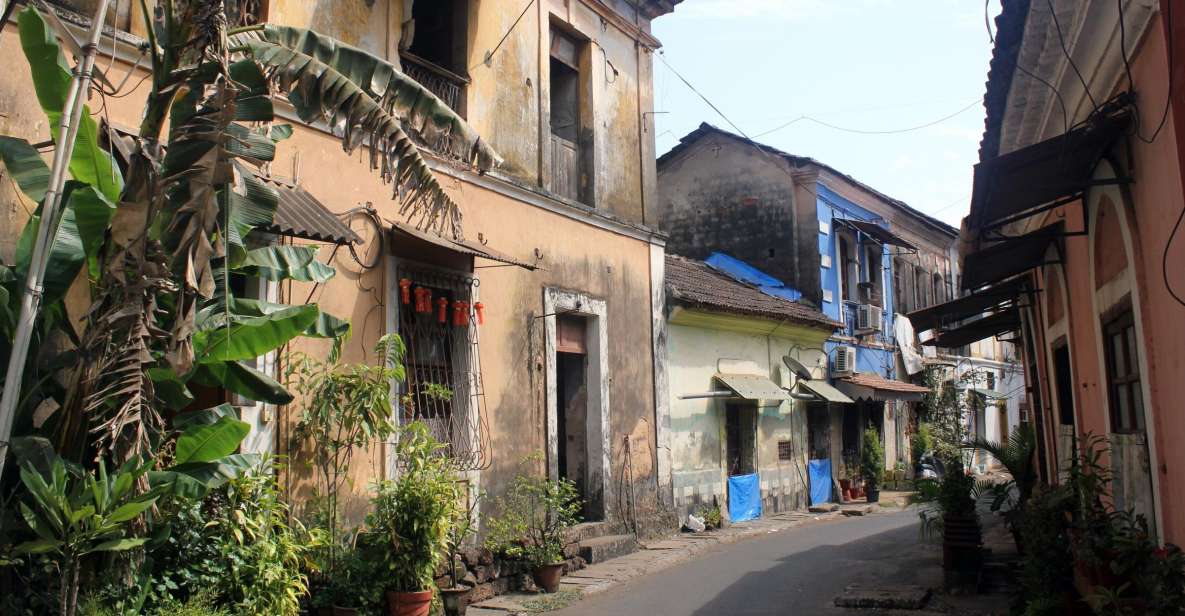
- Fontainhas Latin Quarter lanes with colorful houses, cafés, and heritage points
- Indo-Portuguese architecture stops that show how cultures mixed over time
- A short art break featuring Scandinavian and local artwork
- A local café food tasting built into the route, not an afterthought
- A hilltop finish at Maruti Temple with a calm view over Panjim
Portuguese Goa in Two Hours: what this walk really gives you
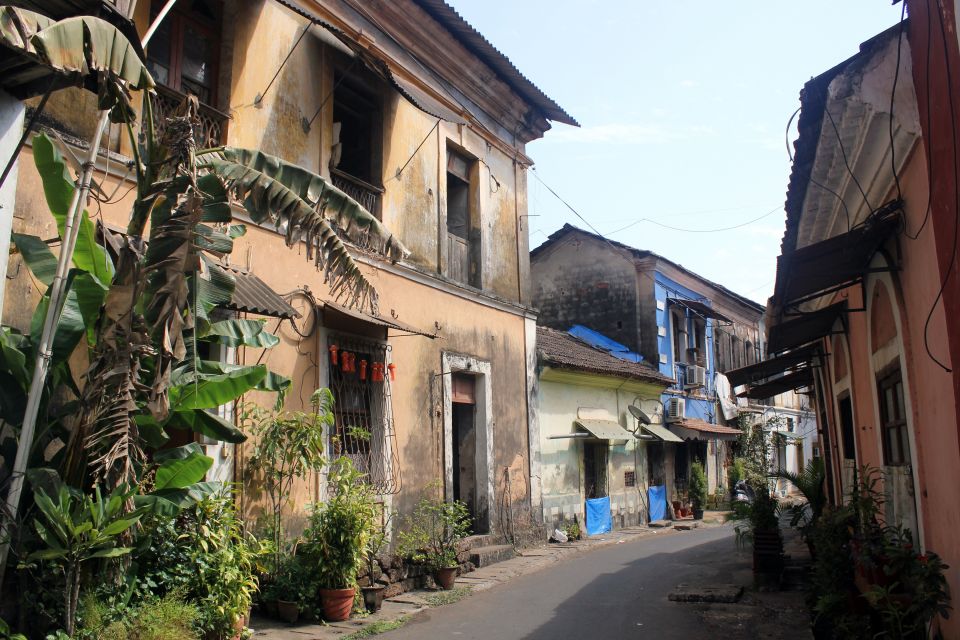
This is the kind of tour that helps you understand a city by walking it, not by speed-watching it. You start in central Panjim and work your way through areas shaped by Portuguese presence—churches, colonial-era government buildings, and the distinct look of Indo-Portuguese homes.
The value is in the pacing and the context. Instead of piling on nonstop lecture, you get a sequence of stops—each with a clear reason—plus an “infotainment” style that keeps the story moving. If you like architecture, you’ll be able to point at details. If you don’t, you’ll still learn how the place works through real people, local life, and cultural mixes you can see with your own eyes.
Also, the price is hard to beat for a guided walk that includes a café tasting and built-in route access to heritage lanes. At $14 per person for 2 hours, you’re paying mainly for a local guide’s perspective and the ability to connect dots between places.
You can also read our reviews of more walking tours in Goa


Starting at Panjim Church: the first landmark and the tone
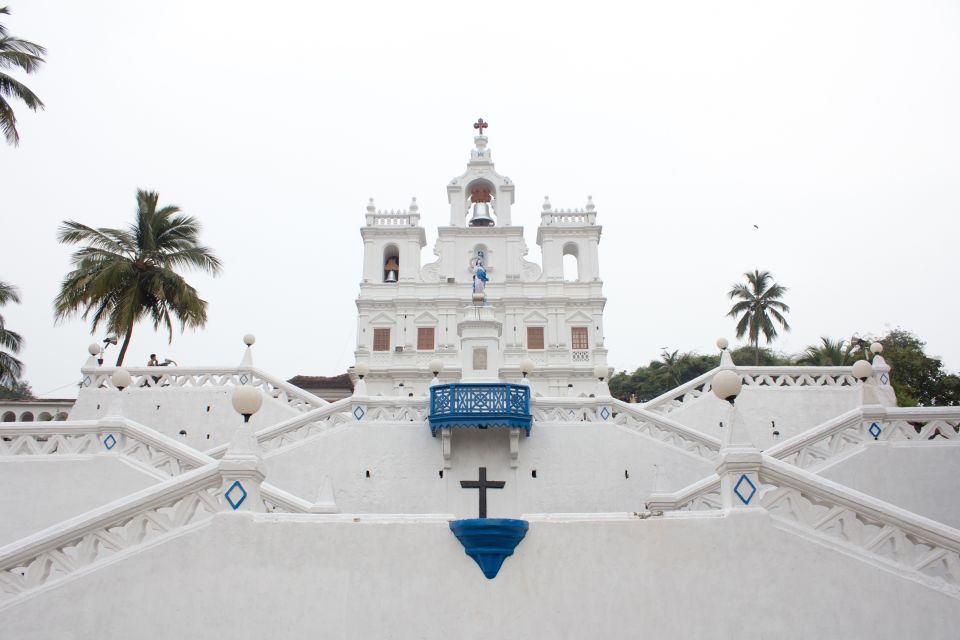
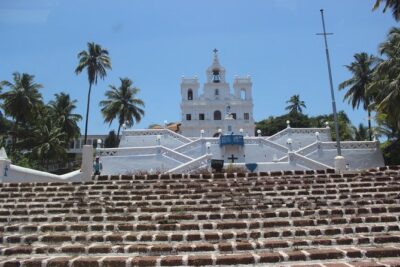
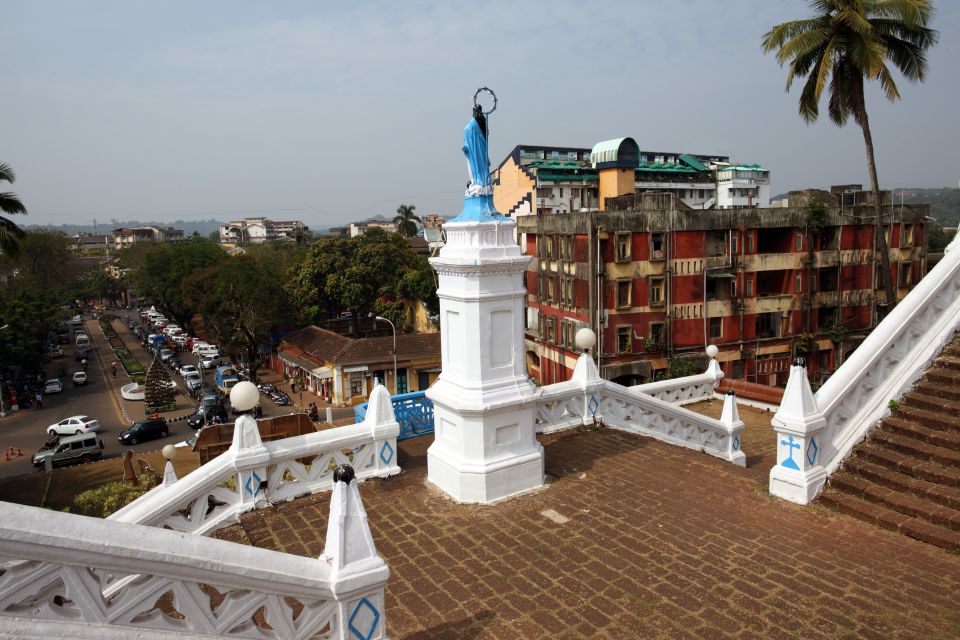
Your walk begins at the staircase of Panjim Church, the iconic white church that acts like a natural “welcome sign” for the area. This first stop matters because it sets the mood: you’re entering a part of Goa where Portuguese influence isn’t abstract. It’s in the built environment, and you can see it immediately.
From there, you begin walking in a straightforward way: short uphill and stepped sections appear later, but early on you’re getting your bearings. You’ll also get the basic rhythm of the tour—what you’re walking toward and why each stop is included—so it feels like a guided route rather than a vague wander.
If you’re the type who hates standing around, this start is good. You move quickly into the story while the area is still easy to orient yourself.
Altinho Hill and the Archbishop’s Palace area: the view + the climb
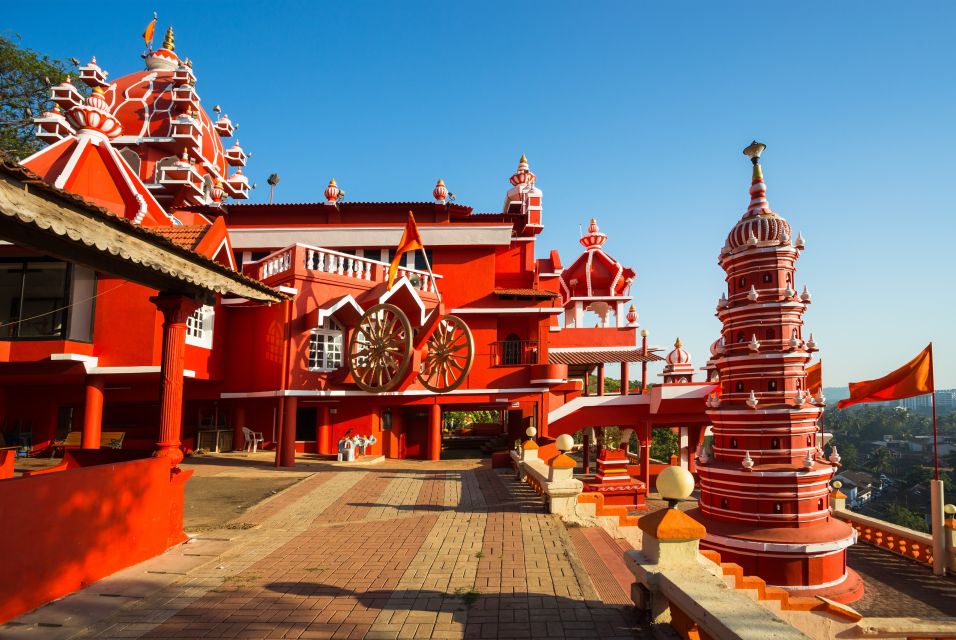
After the church, you head toward Altinho Hill. The route includes uphill sections and stepped streets, so this is where comfortable shoes really earn their keep. But the effort pays off because the hill gives you both a change in scenery and a better sense of Panjim’s layout.
Along this stretch, you move toward the area associated with the Archbishop’s Palace. Even if you don’t go inside (the tour focuses on the walking route and viewpoints), the point is to connect architecture and power—how colonial-era institutions shaped the city’s geography.
One practical tip: if you’re sensitive to stairs, take your time on the steps. The tour is designed for a steady walking pace, not a race. I also recommend drinking water before you start, since a water bottle isn’t included.
Old High Court area: colonial-era power in plain sight
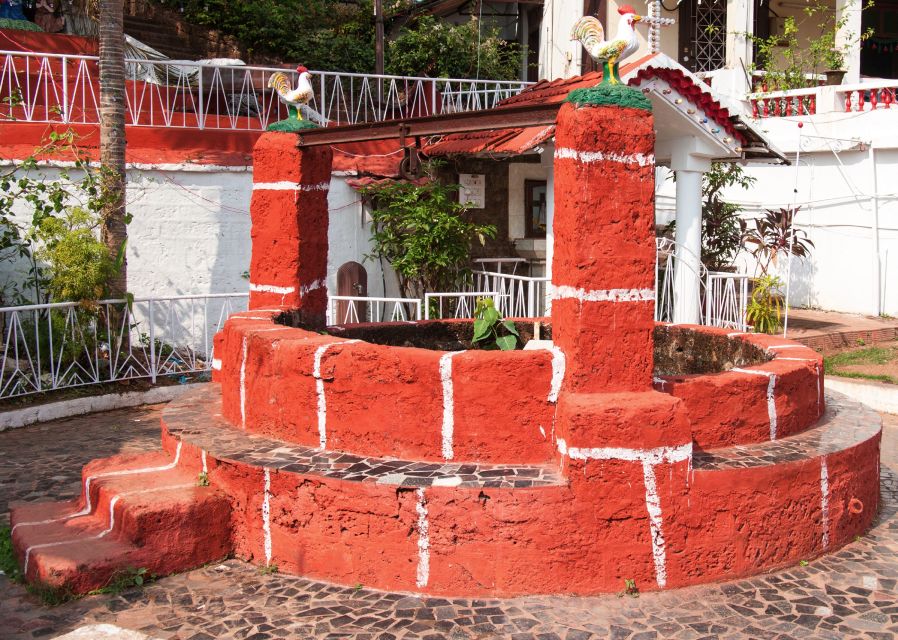
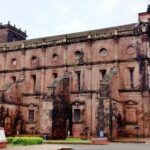
Next comes the Old High Court area, one of the oldest high courts in India and surrounded by colonial-era buildings. This stop is valuable because it turns a political story into something visual. You’re not just hearing that Portuguese or European influence existed—you’re seeing how the city organized itself around institutions.
What I like about this kind of stop is how it changes your attention. Instead of focusing only on churches and balconies, you start noticing how the streets, facades, and surrounding buildings create an urban “system.” The guide’s job here is to help you read the city’s design choices, and this tour is built for exactly that.
If architecture is your thing, you’ll probably enjoy the way the guide connects materials and styles to the era. If you’re less into buildings, the storyline still gives you something to hold onto: why these structures landed here and what life may have looked like around them.
The art gallery stop: Scandinavian meets local Goa
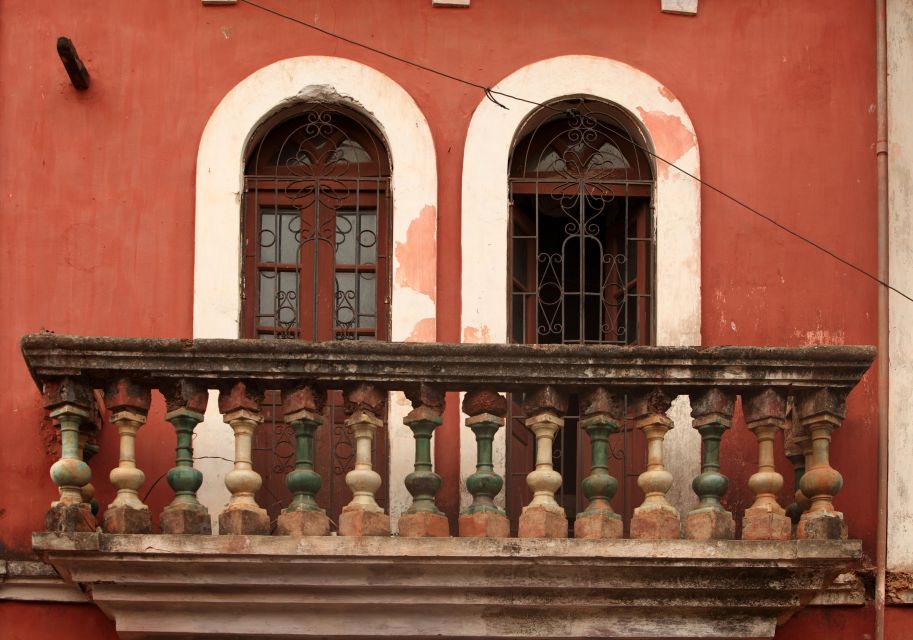
A short break helps keep energy up, and this tour uses it well with a stop at a modest art gallery. The focus here is on a mix of Scandinavian and local artwork—a reminder that Goa’s “outside influences” weren’t only historical. Artistic exchange still happens now, and you get a small snapshot of that.
This stop works even if you’re not an art person. It’s not a long museum-style commitment. It’s a pause in the route that gives you a different lens: culture isn’t only in monuments. It’s also in what’s being made and shown in small spaces.
If you want better photos later, this is a smart moment to reset your eyes. You’ll likely spot contrasts—colors and textures—that help your camera (and your memory) later in the Latin Quarter.
You can also read our reviews of more guided tours in Goa





Visitor center + traditional village section: context you can feel
Midway through, you’ll encounter a visitor center and a segment described as a traditional village area. This part of the walk matters because it gives you background so the heritage homes and monuments don’t feel like random stops.
The tour doesn’t rely on you to already know Goa’s layers. You get enough context to understand why Portuguese-era touches show up where they do and how Indo-Portuguese character became part of everyday streets.
You’ll also appreciate the pacing: these stops create a rhythm, so you’re not stuck in one kind of scene for the whole two hours.
Fontainhas Latin Quarter: the main event for photos and people-watching
Then you hit Fontainhas Latin Quarter, and this is the part most people come for. Expect colorful houses, heritage lanes, and small cafés. This is the area where architecture feels lived-in, not staged.
The tour focuses on more than just sight. You’re guided through lanes and viewpoints where the Indo-Portuguese heritage is easiest to notice—balconies, street character, and the way buildings sit close to the road. You’ll also have chances to slow down and take photos that actually make sense as part of a story, not random snapshots.
What I love here is the blend of old and everyday. A place can look historic and still be functioning as a neighborhood. That’s what you’ll be walking through: quiet corners, friendly local life, and streets that feel made for slower looking.
If you’re worried you’ll miss shots, don’t. This route is built with frequent “attention points,” so you’re not always rushing to the next location.
Chief Minister’s residence (exteriors): quick, useful perspective
From the Latin Quarter, you pass by the Chief Minister’s residence (exteriors). This isn’t a long stop. It’s more of a perspective moment—proof that Panjim still operates as a living seat of governance while also carrying layers of older influence.
This kind of stop can feel odd in a walking tour, but here it has a purpose. It helps you see continuity. Cities don’t reset when eras change; they stack. You move from Portuguese-shaped corners into modern political presence, and the guide’s job is to help you interpret what you’re seeing.
A view point + local café food tasting: rest without losing momentum
You’ll get a viewpoint and then a local café food tasting along the way. This is one of those practical design choices that makes the tour feel smarter than a straight line from monument to monument.
The viewpoint gives you a breather and a bigger-picture look at Panjim. It’s also a good time to check your photos and mental map. Once you see the layout, the lanes back down below often make more sense.
Then comes the café tasting. You’re not left to find food on your own mid-tour, and you’re not stuck eating for an hour. It’s a short, built-in moment (about 15 minutes) that fits the tour length. Just remember that food and drinks beyond the tasting aren’t included, so plan your full meal after.
Ending at Maruti Temple, Altinho: calm finish with a hilltop mood
The tour wraps up at Maruti Temple, Altinho, described as a serene Hindu temple overlooking Panjim. This ending is a good payoff to the earlier climb. After walking through Portuguese-influenced sites, you finish with a place that shows Goa’s spiritual diversity and its ongoing cultural life.
It also changes the pace. You’re no longer looking only at Portuguese-era architecture. You’re ending somewhere peaceful, where the view and the atmosphere help your brain store what you’ve just learned.
If you’re trying to decide how much to do in a short Goa trip, this kind of ending works well. You get a satisfying “final image” that sticks: hilltop calm, city spread below, and the cultural layers you just traced on foot.
Price and value: is $14 worth it?
At $14 per person for 2 hours, this tour is positioned as an affordable guided walk with real extras: heritage lanes, multiple architecture-focused stops, and a short café tasting included. The guide also provides money-saving and exploring tips, which can easily matter more than you expect once you’re out on your own.
Here’s what you should factor in:
- You’re not getting hotel pickup or drop-off. Plan to reach the meeting point on your own.
- A water bottle isn’t included, so you may want to bring your own.
- Food and drinks aren’t included beyond what’s built into the short tasting segment.
When those items are accounted for, the cost still feels fair for a guided route that gives you access to lanes and guided interpretation. If you enjoy architecture and stories, this can save you time and help you avoid wandering without direction.
Logistics that actually matter: meeting point, walking, and what to wear
Meet your guide at the staircase of Panjim Church (address listed as 165, Avenida Teófilo Braga, Goa). Arrive about 10 minutes early so the group can start on time.
Bring:
- Comfortable shoes
- Comfortable clothes
The tour includes uphill sections at Altinho Hillock, so flip-flops are a bad idea. I’d also suggest taking a light layer if the weather shifts—Goa can feel warm and humid, and you’ll be outside a lot.
The tour is wheelchair accessible, but it’s still an on-foot route, so you’ll want to plan your comfort and movement accordingly. And since there’s no transportation included, expect to do the entire experience walking.
One coordination detail: the provider asks you to share an active WhatsApp number for easy coordination. That’s worth doing, even if you’re a low-tech traveler. It makes day-of communication simpler.
Who this tour suits best (and who should pass)
This tour fits best if you want:
- Portuguese-influenced Goa explained through streets and buildings
- Photos that reflect place, not just pretty architecture
- A guide who can connect European and local context (especially around Portuguese presence)
It’s also a good match if you’re doing a short stay and want a concentrated way to understand the city’s layout and heritage areas—church, courthouse area, gallery break, Fontainhas lanes, and a hilltop temple finish.
Consider passing if:
- You dislike walking uphill or stairs and want a mostly flat route
- You need lots of time to sit and rest, since this is a steady two-hour walk
- You rely heavily on loud audio. The guide is described as speaking good English, but at least one person noted the voice can be quiet, so position yourself well to hear.
So, should you book? My straight answer
If you’re spending time in Panjim and you want your history to come with street-level context, I’d book this. The route is short enough to fit into a busy day, but it’s structured enough that you’ll leave with a clearer sense of how Portuguese influence shaped what you see today.
The biggest “yes” reason is the focus on Fontainhas Latin Quarter plus guided interpretation of Indo-Portuguese architecture and heritage homes. The best “maybe” reason is the uphill sections at Altinho Hillock—if you can handle that, you’ll likely get more out of the views and the final temple atmosphere.
FAQ
FAQ
How long is the Portuguese-influenced Goa guided walk?
It lasts 2 hours.
What does the tour include?
You get a trained English- and Hindi-speaking guide, access to hidden lanes and heritage points, and fun stories and insights. There is also a local café food tasting included.
Where does the tour start?
The meeting point is at the staircase of Panjim Church (165, Avenida Teófilo Braga, Goa). Please arrive about 10 minutes early.
Where does the tour end?
The walk ends at Maruti Temple, Altinho, and then the tour finishes in Fontainhas.
Is the tour all walking?
Yes. There’s no transportation included, so the experience is on foot.
Is there an uphill part of the route?
Yes. The walk includes uphill sections at Altinho Hillock, including stepped streets.
What languages are spoken by the guide?
The guide speaks English and Hindi.
Is the tour wheelchair accessible?
It is listed as wheelchair accessible.
What should I bring?
Wear comfortable shoes and comfortable clothes.
What’s not included in the price?
Hotel pickup and drop-off, a water bottle, and food and drinks (beyond the included tasting).