REVIEW · CANDOLIM
Candolim: Heritage Walk of Fort Aguada Port and Jail Complex
Book on GetYourGuide →Operated by Make It Happen · Bookable on GetYourGuide
Goa’s Fort Aguada has a darker side. This 1-hour heritage walk turns the usual sea-view sightseeing into a story about defenses, dictatorship, and prisoners. I like that you get Portuguese-style architecture plus exclusive access to parts of the fort complex most people don’t see.
What I really love is how the guide makes the place feel specific, not generic. You’ll hear the freedom-movement angle—told with care—while still getting the practical context of how the fort guarded the Portuguese colony. I also like that the tour is short and focused, so you can fit it into a busy Goa day without burning half of your trip.
One drawback to plan around: it’s a walking route inside the fort complex, and it can be quite hot depending on the time you choose. Also, the tour doesn’t provide umbrellas, rain gear, hats/caps, or masks—so bring what you need.
In This Review
- Key things that make this Heritage Walk worth your time
- Fort Aguada With a Prison-Cell Storyline: Why This Walk Hits Different
- Starting at the Lower Fort: How to Set Yourself Up for a Smooth 1-Hour Tour
- Portuguese-Style Architecture and Sea Views: What You’ll Notice First
- The Chapel, Freshwater Spring, and Kitchens: Exclusive Access That Changes the Mood
- Aguada Jail Cells: When the Story Turns From Fort Defense to Political Imprisonment
- How the Guides Make It Work: Niranjan, Veron Franco, Yashashvi, and Veron
- Timing, Weather, and What to Bring Inside a Fort
- Price and Value: Does $10 Really Make Sense Here?
- Who This Heritage Walk Fits Best (and Who Might Skip It)
- Should You Book This Fort Aguada Heritage Walk?
- FAQ
- How long is the Fort Aguada Heritage Walk?
- What’s included in the price?
- Is there any transport inside the fort complex?
- What language is the tour guide?
- Is this a private tour?
- Can I cancel and get a full refund?
Key things that make this Heritage Walk worth your time
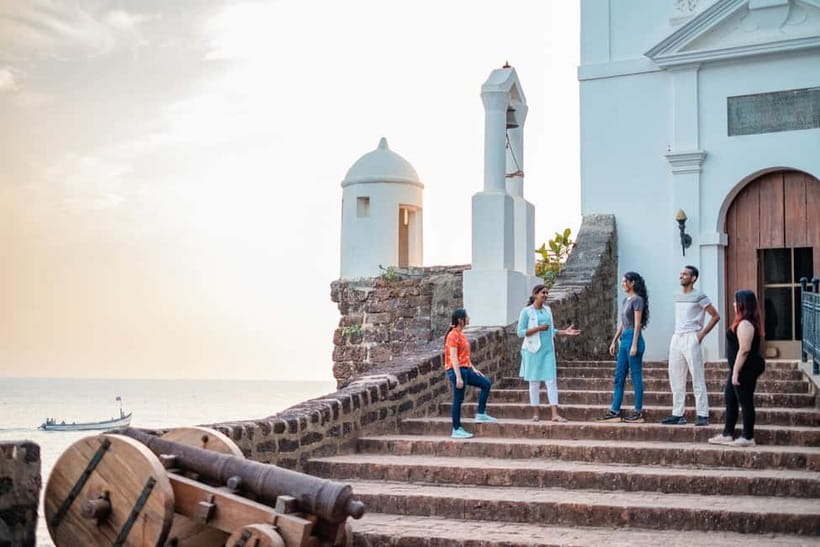
- Exclusive access areas: you’ll visit spots tied to daily life and confinement, not just the main viewpoints
- Chapel + freshwater spring + kitchens: you get to see how the fort functioned beyond “a wall and a view”
- Prison cells in the Aguada jail: the story shifts from battles to what it meant to be incarcerated
- Panoramic seaside viewpoints: you balance grim history with the geography that made the fort strategic
- English live guidance: guides like Niranjan and Veron Franco are specifically praised for making details click
- Included entry ticket value: the fort entry fee is part of the price
Fort Aguada With a Prison-Cell Storyline: Why This Walk Hits Different

Fort Aguada is the kind of place that can be reduced to postcards: thick walls, Portuguese influence, and a strong view over the coast. This heritage walk keeps all that, but it adds a second layer you’re not likely to get on your own. You’re not just looking at stones—you’re learning why the fort mattered, and how it got used when political power got ugly.
The big theme is control. The fort shows up in stories about Portuguese defense against invasions from the Dutch and the Marathas, and then it shifts into something more personal: a prison complex created to hold Goan freedom fighters. If you’re the type who likes history with real stakes, this works because it links battles, policy, and confinement in a way that’s easy to follow over one hour.
And yes, you still get the sea views. It’s a strange pairing in the best way: the same walls that protected a colony also became part of a system that punished resistance.
Starting at the Lower Fort: How to Set Yourself Up for a Smooth 1-Hour Tour

The tour meets at the ticket counter of the Lower Fort Aguada Port and Jail Complex Heritage Walk. The structure is simple: you begin inside the fort complex and you move on foot (no vehicle use inside). That matters because you’ll want comfortable shoes—there’s no “sit and roll” option here.
This is a live English tour, and it’s listed as a private group. In practice, that usually means you’re less likely to feel like you’re being herded. It also makes it easier for the guide to keep the pace readable, especially when the subject matter goes from architecture to dictators to imprisonment.
Also plan for “fort timing.” Even in just an hour, you’ll spend enough time outside the shaded areas to notice heat. One reviewer specifically pointed out the 12:00 start time can be hot. If you’re sensitive to sun, pick an earlier slot.
Portuguese-Style Architecture and Sea Views: What You’ll Notice First

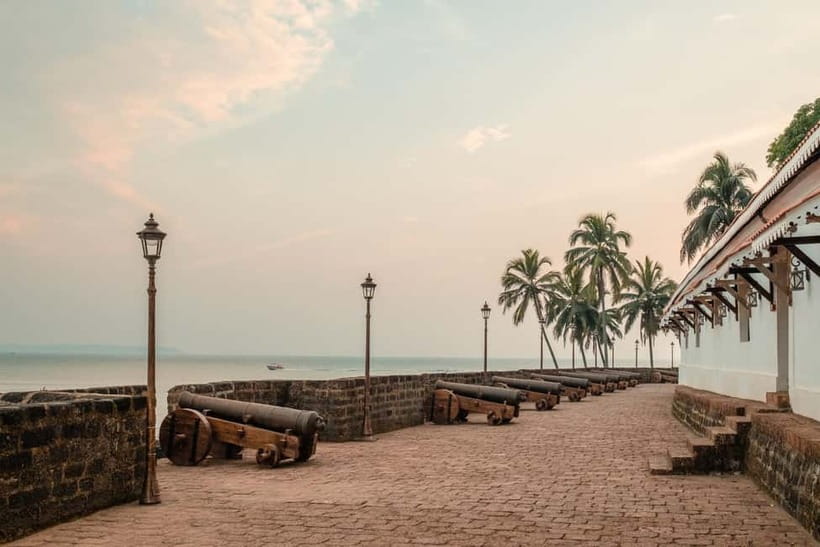
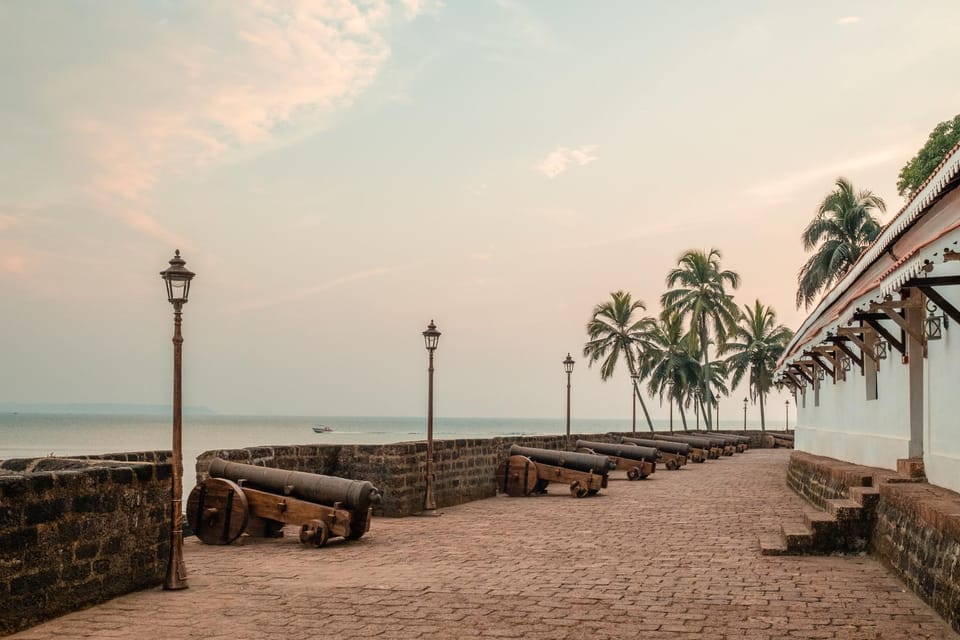
In the first stretch of the walk, you’ll focus on what makes Fort Aguada visually recognizable. The Portuguese-style architecture is the anchor. You’ll see how the fort looks built for function: strong forms, strategic positioning, and an overall sense of order.
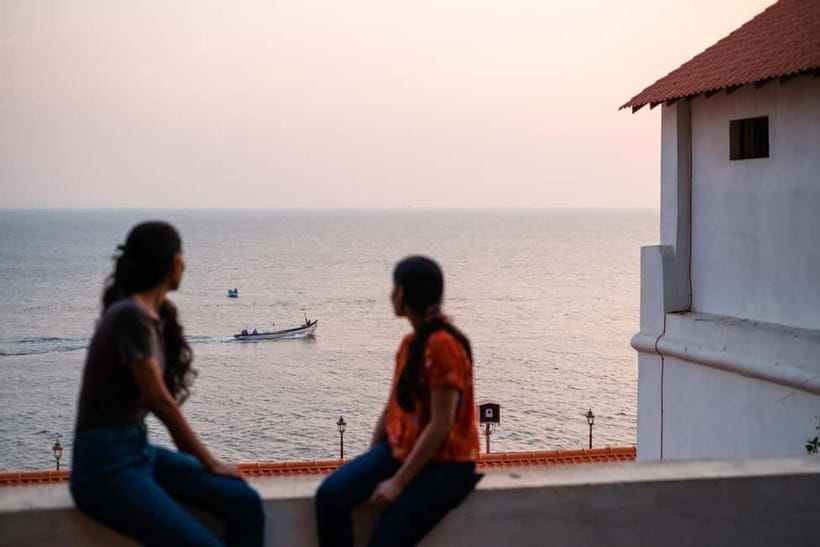
Then the guide connects the design to the setting. You’ll get panoramic views over the seaside—so you can understand the “why” behind the fort’s location. It’s easier to respect the engineering when you can see what defenders and attackers would have been dealing with.
I also like that the view isn’t treated like a break from the story. The guide ties it back to strategy—how the coastline and the fort’s shape affected control. It keeps the tour from turning into photo stops with a history lecture afterward.
The Chapel, Freshwater Spring, and Kitchens: Exclusive Access That Changes the Mood
The standout value here is the set of interior-feeling spaces. The walk includes access to areas inside the lower fort that aren’t generally open to the public.
You’ll visit a chapel, and the tone shifts right away. It’s not just “religion as trivia.” The guide uses it to show daily life inside a fortified system—how people lived, prayed, and organized themselves in a place designed for power.
Next comes the freshwater spring. That’s one of those details that sounds small until you realize what it means in a fort context. Access to water is what keeps a defensive outpost usable, not just impressive. Seeing it in context makes the fort’s design logic feel real.
Then you’ll move through spaces connected to food preparation and support—the former kitchens. Even when the rooms aren’t large or glamorous, they help you picture the rhythm of the fort as a working institution, not only a battlefield object.
If you love history that shows how people survived day-to-day, these stops are the heart of the experience.
Aguada Jail Cells: When the Story Turns From Fort Defense to Political Imprisonment

The tour’s emotional center is the prison side—the Aguada jail and its dingy prison cells. This is where the conversation stops being general and starts being pointed.
You’ll hear how a former Portuguese dictator, Antonio Salazar, made the decision to repurpose the lower fort into a prison complex used to house convicted Goan freedom fighters. Hearing that name in the actual space where confinement happened is a big part of the impact. It’s not just history reading; it’s a setting that forces you to slow down.
The guide also covers the larger conflict: epic battles between Indian kingdoms and the colonial Portuguese empire for control of the fortress. That background matters. Without it, you might feel stuck on one grim chapter. With it, you see the whole process—why the Portuguese wanted this site, why local powers fought back, and how the conflict became a fight over people as well as territory.
One practical note: prison-cell spaces tend to be dimmer and more enclosed than the viewpoints. Wear shoes that can handle uneven indoor flooring, and don’t expect “easy access” like a polished museum.
How the Guides Make It Work: Niranjan, Veron Franco, Yashashvi, and Veron
A good fort tour lives or dies by the guide, and this one has a strong track record. People praise the storytelling style and how clearly the guides link architecture to politics.
Names you’ll see in top ratings include Niranjan, Yashashvi, and Veron Franco (also mentioned simply as Veron). Multiple people point out that the guides cover a wide range of topics—dictators, religion, colonialism, and the specific role the prison complex played—without losing the thread.
There’s also a pattern in the feedback: the guides are described as passionate and patient. That matters because the subject isn’t light, and you’ll want someone who can pace explanations and answer questions without rushing through key parts.
If you’re booking based on who’s guiding, ask about guide availability when you reserve. If Veron Franco is offered, you’ll likely be in good hands based on the repeated praise.
Timing, Weather, and What to Bring Inside a Fort

This is a walking trail inside the monument complex, with no vehicle help along the route. That means comfort choices aren’t optional.
Here’s what you should plan for based on the tour info:
- Bring sun protection. The tour doesn’t provide hats/caps.
- Don’t count on rain gear. Umbrellas and raincoats are not provided.
- If you use masks, bring your own; the tour doesn’t provide face masks.
And again, timing matters. One reviewer flagged that the 12:00 start can be very hot. If you can choose, earlier is often smarter—especially in Goa where sun can feel relentless.
You’ll also get better results if you arrive ready to walk. The tour starts at the meeting point at the ticket counter, and in at least one case the tour began as scheduled after an early arrival.
Price and Value: Does $10 Really Make Sense Here?

At around $10 per person for a 1-hour guided experience, the value is mostly about what you get beyond a self-guided visit.
First, your entry ticket to Fort Aguada is included. One reviewer specifically called out that the foreigners’ entry fee (400 INR) is included, so you’re not stuck adding it later at the gate.
Second, you get exclusive access to specific areas like the chapel, freshwater spring, kitchens, and the prison cells. If those stops were paywalled or unavailable, the experience would feel like a standard exterior walk. Instead, you’re paying for access and interpretation.
Third, the guide adds the missing connective tissue. Architecture without context is just architecture. Jail cells without context become grim but shallow. Here, the guide explains why those spaces exist and what they were used for.
One extra value point: a reviewer mentioned being able to check out small, modern museum spaces inside the prison after the tour, included in the price. That’s not something you should assume for every single departure, but it’s clearly been part of the experience.
Who This Heritage Walk Fits Best (and Who Might Skip It)
This is ideal if you:
- Want history that’s grounded in a real place
- Like tours that connect politics and architecture
- Prefer a tight 1-hour format over a long, slow day
- Care about the Goan liberation-movement story, not just colonial sightseeing
It’s less ideal if you:
- Hate heat and tight indoor spaces
- Want lots of free time for independent wandering
- Are looking for a purely scenic outing with minimal emotional weight
Also, because it’s a walking route inside the monument complex, it suits people comfortable walking on fort terrain.
Should You Book This Fort Aguada Heritage Walk?
I think you should book this if you want the fastest path to understanding Fort Aguada beyond the obvious views. The combination of Portuguese architecture plus prison history makes the hour feel purposeful, not rushed.
The best reason to choose it is the access. Seeing the chapel, the freshwater spring, the kitchens, and the jail cells changes your relationship with the fort. Add a strong guide—people repeatedly praise Niranjan, Yashashvi, and Veron Franco—and you’re getting a guided story that’s easier to remember than a stack of facts.
If you’re sensitive to sun, pick a cooler start time and bring what the tour doesn’t supply. Do that, and you’ll get a compact, high-impact experience for your Goa day.
FAQ
How long is the Fort Aguada Heritage Walk?
The guided heritage walk runs for 1 hour.
What’s included in the price?
You get a heritage walk led by a local storyteller, entry ticket to the Fort Aguada monument, and exclusive access to the freshwater spring, kitchens, and prison cells.
Is there any transport inside the fort complex?
No. This is a walking trail, and no vehicles are used inside the monument complex.
What language is the tour guide?
The live tour guide speaks English.
Is this a private tour?
Yes, it’s listed as a private group.
Can I cancel and get a full refund?
Yes. You can cancel up to 24 hours in advance for a full refund.
If you tell me what time of day you’re thinking of going in Candolim, I can help you pick a practical start time so the heat doesn’t steal your enjoyment.